In December I got an ebook copy of Karen Healey's Guardian of the Dead. I found a lot that I didn't like as I read it, and little that I did like.
It is on my mind today because of a pre-conference workshop I'm giving on Wednesday in Albuquerque at the annual conference of the New Mexico Library Association. I'll be talking about inappropriate use of sacred Native stories. I've got examples of picture books, but not a novel, so I think I'll add Guardian of the Dead to my power point and worksheet set.
With that thought in mind, I was reading online reviews and came across one that hits on many of the same things I noted. The reviewer is Kari, and her review is on the goodreads site.
- Home
- About AICL
- Contact
- Search
- Best Books
- Native Nonfiction
- Historical Fiction
- Subscribe
- "Not Recommended" books
- Who links to AICL?
- Are we "people of color"?
- Beta Readers
- Timeline: Foul Among the Good
- Photo Gallery: Native Writers & Illustrators
- Problematic Phrases
- Mexican American Studies
- Lecture/Workshop Fees
- Revised and Withdrawn
- Books that Reference Racist Classics
- The Red X on Book Covers
- Tips for Teachers: Developing Instructional Materials about American Indians
- Native? Or, not? A Resource List
- Resources: Boarding and Residential Schools
- Milestones: Indigenous Peoples in Children's Literature
- Banning of Native Voices/Books
- Debbie on Social Media
- 2024 American Indian Literature Award Medal Acceptance Speeches
- Native Removals in 2025 by US Government
Monday, April 25, 2011
Friday, April 22, 2011
Are your kids going to Summer Camp?
Today's post is prompted by Nicole, a reader who wrote to tell me about an article called Boys Gone Wild in baystateparent: Massachusetts' Premier Magazine for Families. The article describes the activities of boys who attend Night Eagle Summer Camp in Vermont. I hasten to add that the boys and their leaders do a lot of playing-Indian activities...
In February 2011, I wrote about learning that a group of boy scouts from Louisiana who had been at Nambe Pueblo (that's where I'm from) to study our dances with the intent of performing them in Louisiana. I pointed out that I don't think the scouts would go to a Catholic mass, study the priest and then perform what he did. Our dances are sacred, just like the prayers offered by a priest.
Maybe (I say, with hope) those scouts did not know they were being insensitive. That is probably because they've been in the scouting program for several years where they did all kinds of "Indian" activities that, bit-by-bit, made them unaware that those activities are inappropriate.
When we tell our stories, for example, we don't tell them around a campfire as a means of entertainment. They--like stories from the Bible--are significant to us in some way. In American society, however, they aren't seen as religious stories. Instead, they're "myths" and "legends" and "folktales" that anyone can tell, anytime they want to, as shown in this page from The Berenstain Bears Go To Camp published in 1982. At the time of its publication, the review in Reading Teacher said
You can see that sort of stereotypical imagery on things like council patches of the Boy Scouts of America. In Studying Native America: Problems and Prospects (1998 Univ of Wisconsin Press), Russell Thornton writes (p. 299):
So... are your kids going to Summer Camp? Will you be attentive to the stereotypical activities sanctioned by the camp? Will you say anything, to your children or to the camp? I hope so, because studies show that stereotypical images like these mis-educate children and that they have a negative effect on the self-esteem of Native children. Two good reasons, don't you think, to stop doing this sort of thing?
In February 2011, I wrote about learning that a group of boy scouts from Louisiana who had been at Nambe Pueblo (that's where I'm from) to study our dances with the intent of performing them in Louisiana. I pointed out that I don't think the scouts would go to a Catholic mass, study the priest and then perform what he did. Our dances are sacred, just like the prayers offered by a priest.
Maybe (I say, with hope) those scouts did not know they were being insensitive. That is probably because they've been in the scouting program for several years where they did all kinds of "Indian" activities that, bit-by-bit, made them unaware that those activities are inappropriate.
When we tell our stories, for example, we don't tell them around a campfire as a means of entertainment. They--like stories from the Bible--are significant to us in some way. In American society, however, they aren't seen as religious stories. Instead, they're "myths" and "legends" and "folktales" that anyone can tell, anytime they want to, as shown in this page from The Berenstain Bears Go To Camp published in 1982. At the time of its publication, the review in Reading Teacher said
"Though Grizzly Bob's Day Camp looks exciting, Brother and Sister Bear are apprehensive. But after spending a few days trying things out, they discover they can have fun."A chunk of that fun means doing Indian things. Or, in other words, playing Indian. On the page shown here, the cubs are gathered round as Grizzly Bob tells them a story. The clothing Grizzly Bob wears and the way he stands reflect stereotypical pop culture images of Indians.
You can see that sort of stereotypical imagery on things like council patches of the Boy Scouts of America. In Studying Native America: Problems and Prospects (1998 Univ of Wisconsin Press), Russell Thornton writes (p. 299):
Of all the institutions in American society, the Boy Scouts of America have probably done the most damage in miseducating the public about Native American cultures. Although their "Indian Lore" merit badge has recently experienced a dramatic improvement through the advice of anthropologist David Hurst Thomas, the honorary society called Order of the Arrow annually initiatives thousands of boys into the martial, romantic version of Indian culture through ceremonies drawn from the writings of Longfellow and James Fenimore Cooper."I agree with Thornton but my net is a bit wider. I think the camps children go to each summer are equally responsible. The Boy Scouts of America creates space for this sort of play-Indian activity to continue. The Y-Indian Princess program is similarly problematic. As Thornton says, the BSA has made some changes. So has the Y-Indian Princess program. But, this sort of thing continues, especially in summer camps. Every semester, students in my courses tell me about the summer camps they went to and how they played Indian. After studying American Indians---real ones, not the images of pop culture---they see the summer camp activities in a different light. Some call them embarrassing; others call them racist.
So... are your kids going to Summer Camp? Will you be attentive to the stereotypical activities sanctioned by the camp? Will you say anything, to your children or to the camp? I hope so, because studies show that stereotypical images like these mis-educate children and that they have a negative effect on the self-esteem of Native children. Two good reasons, don't you think, to stop doing this sort of thing?
Labels:
Boy Scouts of America,
playing Indian,
summer camp
Monday, April 18, 2011
Top Board Books for the Youngest Readers
Update on Oct 17, 2022: We add to this list, first posted in 2011. If you have additional recommendations, let us know in a comment and we'll take a look!
_____
Today, I'm adding a Top Board Books list to that section. It isn't a Top Ten list because some of the books are from the same author and titling it "Top Ten" doesn't work. Each of the books are written or illustrated by a Native author or illustrator, and in some way, they are "tribally specific."
Baby Learns about Colors, by Beverly Blacksheep. Published in 2003 by Salina, it is one of a series of eight bilingual books with Dine (Navajo) and English text that feature a baby girl, her growth, and things she learns in a tribally specific context. Other books in the series are Baby Learns about Animals, Baby Learns about Seasons, Baby Learns about Senses, Baby Learns bout Time, Baby Learns about Weather, Baby Learns to Count, and Baby's First Laugh. For more information, see my essay: Beverly Blacksheep's Board Books.
I See Me, by Margaret Manuel. Published in 2010 by Theytus, the book can be personalized. By that, I mean that each page has a line of English text about the photo, and, a blank line for parents/teachers to write a caption in their own language. If you wish, the publisher provides captions in a specific language. This book is being given to families through the American Indian/Alaska Native Reach Out and Read program.
Learn the Alphabet with Northwest Coast Art. Published in 2010 by Garfinkle Publications, this board book is one of several that are illustrated by First Nations artists. The back cover provides information about the item and artist whose work is featured on each page. The other book from Garfinkle that I know and recommend is Learn to Count with Northwest Coast Native Art. They also sell puppets, plush animals, stickers, and stamps. Though I don't have any of the items, I think they can be used to enhance the study of the art in the books.
Welcome Song for Baby: A lullaby for newborns, by Richard Van Camp. Published in 2007 by Orca, it was given to every baby born in British Columbia in 2008. Richard is Dogrib (the Dibrib people are in Canada). The book was very well received and reviewed as a book primarily for parents.
That's it... for now. Fourteen books. If you know of others, please let me know! A hearty thanks to Jean Mendoza for working with me on this list, and for being my dear friend.
___________________
Update, March 6, 2012
__________
Update, November 18, 2014
Add Julie Flett's exquisite We All Count. It has words in Cree and English.
_________
Update, November 4, 2016
Delighted to add these!
Good Morning World, by Paul Windsor (see review):
Debbie Slier's Loving Me (see review):
Celebrate My Hopi Corn and Celebrate My Hopi Toys by Anita Poleahla and Emmett Navakuku (see review):
My Heart Fills With Happiness by Monique Gray Smith, illustrated by Julie Flett (see review):
And, Richard Van Camp and Julie Flett's We Sang You Home (see review):
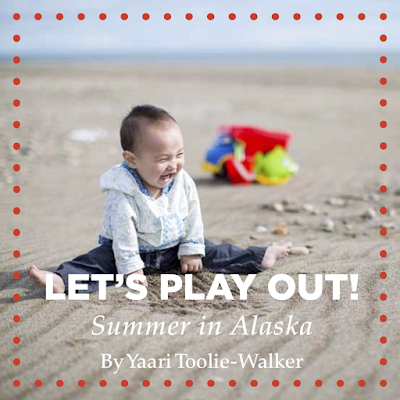
Update on Monday, Oct 17, 2022: These board books by Joni Spiess, Angela Y. Gonzales, Yaari Toolie-Walker, and Carla Snow are terrific! Review is here.
Labels:
board books,
recommended,
Top Ten
Sunday, April 17, 2011
Jacques Duquesne's OUKALA LE PETIT INDIEN (Oukala the Little Indian)
![]() | |
| Cover, propped up on laptop |
When I come across books in other languages that are about---or reference---American Indians, I buy them if they're in my budget. Can't beat $1.00 at a library sale!
I don't speak or read French, so am using online translation programs to figure out what the book is about. I can't find a translation for Oukala. "le Petit Indien" is either "the Little Indian" or "the Small Indian." His horse is named Super.
As you can see, the book is laid out much like a comic book. Oukala likes to ride his horse and play with his bow and arrow (frame 1). His dad is the chief of their tribe (frame 3). He wears a warbonnet and a suit and tie (like a businessman). And, he drives a car. In frame 4, Oukala's father tells him that he has to prove himself as able to be a chief, too. To do that, he's got to take a trip around the world. The two guys in frame 5 in striped green shirts are brothers (not related to Oukala) who
That is the set up. From there the book is in sections: New York, Canada, the Wild North, the Voyage on the Ship, England, Super is Injured, Super Runs a Race, the Metro in Paris, a Visit to the Zoo, Winter Sports, Italy, Venice, Airplane Trip, and last, the Desert.
In New York City, Oukala admires the buildings. I don't know if he knows it (yet) but Rika and Beka have followed him. They're in a red car. They tell a policeman that Oukala has stolen the horse from a circus. The police, Rika, and Beka chase Oukala. He and Super duck into a skyscraper and ride the elevator to the top. The police follow but figure out they've been tricked by Rika and Beka. Oukala and Super get away, while Rika and Beka end up in jail. The End. (It doesn't say "The End." I'm adding that myself to mark the end of that section/chapter/story.) On to...
Canada. There, Oukala meets Canadian Mounties who invite him to the camp where they train their horses. While there, Rika kidnaps Oukala. Super is sad but eventually finds him and sets him free. They run away. The End.
The Wild North is the next stop on the world tour. Oukala and Super hang out with Eskimos and their dogs who will take them to catch the ship. Beka and Rika arrive in a helicopter and try to chase them but slip and slide on ice. Oukala and Super make it to the ship, named Tabeth.
On the ship, they pay their passage by Super doing tricks and Oukala helping out in the kitchen. The ship hits an iceberg and the captain orders everyone into lifeboats. The captain looks back at the ship, and sees Beka and Rika onboard. Turns out the ship is ok and they head back to it where Beka and Rika chase them again---again, unsuccessfully.
In England, Oukala and Super admire Big Ben, Parliament, and Buckingham Palace. They meet a little girl who invites them to a costume party. Everyone there thinks Super is a person-in-costume, and when they figure out he's really a horse, Super and Oukala are thrown out of the party. But, a man named Tom Godart asks Oukala if he's a real Indian and if he wants to be in a television movie. Oukala agrees to do it.
Oukala and Super go with Tom and filming starts. Newspapers feature the film, "Oukala!" In the film, Oukala and Super are being chased by a cowboy. They leap off a bridge, into the river that flows beneath it. Super's leg is injured in the leap. An ambulance arrives and takes him to a hospital. The newspaper reports the injury. Beka and Rika read about it and head to the hospital, but Oukala and Super (on crutches) leave and there is no chase this time.
Oukala and Super get on a plane for Paris. Being on the plane makes them nervous, but they land and go to a horse race. They join it, heading for a hedge. Behind it is Rika with a lasso. He throws it to catch Super, but Oukala cuts the rope with his knife and they go on to win the race.
In Paris, they see the Eiffel Tower and Notre Dame Cathedral, and go beneath the city to ride the metro. They figure out they're on the wrong train. Getting off, Super's tail is caught in the door. A worker makes the train wait and Super is ok, but Oukala and Super are lost. A boy named Martin helps them find the right train and invites them to go to zoo...
Martin, his family, Oukala, and Super get into a car and go to the zoo where they see lions, monkeys, and elephants. Rika and Beka are there, too, disguised as zoo workers. They ask Oukala if he wants to see a panther, but it is a trick. Oukala and Super are caught in a cage. Martin rescues them. The monkeys throw banana peels at Rika and Beka, and the elephant sprays them with water.
Ok... I think I'll stop with the summaries! Each place Oukala and Super go, they have an adventure related to the place, and usually, Rika and Beka are in pursuit. The stories remind me, somehow, of the Three Stooges or similar slapstick stories where goofy things happen. In the end, Oukala's world tour is over and in the last story (the Desert) nomadic (nomades) people ride up on camels and save him while police arrive and take Beka and Rika to prison. In the very last frame of the book, Oukala and Super get on another boat and head home.
It is a curious story. It is set in the present time (cars, metro, etc.), but throughout, the Indian characters wear feathers. Oukala's dad and brothers wear Western clothes, but Oukala doesn't. He's the star of the book and the television movie, too. An odd story all around.
I wonder how it fared in France?
*Thanks, Elizabeth and Isabelle for writing to tell me the Kossar brothers aren't brothers to Oukala.
Labels:
French story,
international,
Oukala Le Petit Indien
Friday, April 15, 2011
Audio archive of "An Indigenous Scholar's Use of Social Media"
On Wednesday (two days ago) I gave a lecture at the University of Illinois Graduate School of Library and Information Science. It was cosponsored by the Community Informatics Initiative and the Center for Children's Books.
The talk itself is titled "An Indigenous Scholar's Use of Social Media." The audio recording and slides I used are available at GSLIS Lectures. Please note: The slide with "Skype" across the top has a typo at the bottom. "Florida Illinois State" should be "Florida" on one line and "Illinois State" on the next line. (As I made edits and created new slides the morning of the presentation, my computer blue-screened. As you'll hear at the top of the audio, I gave a shout out to Sarah Park for pointing me to Dropbox a few months ago. Thanks to Sarah and Dropbox, I didn't have to start all over. But I didn't catch this typo.)
I ended my presentation by playing the Google Search Story video I made a few months ago. Each time I show that video, I learn that people in the audience created one for their own site. Case in point: Matthew Sakiestewa Gilbert added one to his blog, Beyond the Mesas. Take a look at Matt's video. Matt's is enrolled with the Hopi Tribe in Arizona.
The talk itself is titled "An Indigenous Scholar's Use of Social Media." The audio recording and slides I used are available at GSLIS Lectures. Please note: The slide with "Skype" across the top has a typo at the bottom. "Florida Illinois State" should be "Florida" on one line and "Illinois State" on the next line. (As I made edits and created new slides the morning of the presentation, my computer blue-screened. As you'll hear at the top of the audio, I gave a shout out to Sarah Park for pointing me to Dropbox a few months ago. Thanks to Sarah and Dropbox, I didn't have to start all over. But I didn't catch this typo.)
I ended my presentation by playing the Google Search Story video I made a few months ago. Each time I show that video, I learn that people in the audience created one for their own site. Case in point: Matthew Sakiestewa Gilbert added one to his blog, Beyond the Mesas. Take a look at Matt's video. Matt's is enrolled with the Hopi Tribe in Arizona.
Monday, April 11, 2011
Free lecture: An Indigenous Scholar's Use of Social Media
On Wednesday at 3:00 4:00, I'll be giving a lecture at the Graduate School of Library and Information Science at the University of Illinois. The talk is sponsored by UIUC's Community Informatics Initiative and the Center for Children's Books.
Community Informatics is (quoting from their website):
And the Center for Children's Books is (quoting from their website, too):
Community Informatics is (quoting from their website):
a research and teaching center focused on working with communities to address their information and technology needs. Our mission is to address literacy in the Internet age, equitable access to the means of digital production, and policy related to communities and information technology.
And the Center for Children's Books is (quoting from their website, too):
a crossroads for critical inquiry, professional training, and educational outreach related to youth-focused resources, literature and librarianship.My talk is titled "An Indigenous Scholar's Use of Social Media." I'll talk about how/why I use available social media tools (my blog), Twitter, Facebook, listservs, contrasting their reach with traditional print materials (books and journals), and their audience, too.
Sunday, April 10, 2011
Better Book Titles new title for INDIAN IN THE CUPBOARD
Better Book Titles. The site is new (to me) and interesting... Its description is
For those of you who object to obscenity, you best not look at the site. For those of you who enjoy bawdy and edge humor, you can see thumbnails of the entire set here.
Relocation---for those who did not learn about it in school---was a federal government policy where the goal was assimilation that would also result in the weakening of tribal identity and thereby the ultimate demise of Native Nations.
The creator of the Better Title suggests that putting Indians under the full control of children, where the child has power over the life and death of an Indian by putting (relocating) that Indian in a cupboard, is worse than the actual Relocation policy.
"This blog is for people who do not have thousands of hours to read book reviews or blurbs or first sentences. I will cut through the cryptic crap and give you the mat of the story in one condensed image...."The blog archive reaches back to July 2010. There are Better Book Titles for a handful of children's and young adult books. To the right you see the Better Book Title for Indian in the Cupboard, by Lynne Reid Banks, posted on April 5th, 2011.
For those of you who object to obscenity, you best not look at the site. For those of you who enjoy bawdy and edge humor, you can see thumbnails of the entire set here.
Relocation---for those who did not learn about it in school---was a federal government policy where the goal was assimilation that would also result in the weakening of tribal identity and thereby the ultimate demise of Native Nations.
The creator of the Better Title suggests that putting Indians under the full control of children, where the child has power over the life and death of an Indian by putting (relocating) that Indian in a cupboard, is worse than the actual Relocation policy.
Labels:
Better Book Titles,
Indian in the cupboard
Subscribe to:
Posts (Atom)