Wednesday, May 14, 2014

Why I Advocate for Books by Native Writers and Illustrators/Gallery of Native Writers and Illustrators

Editor's Note: Scroll down to see the photo gallery of Native writers and illustrators.

I spent an hour today in a twitter chat hosted by First Book. The chat was part of the We Need Diverse Books campaign.

In the chat I advocated for authors who are Native. 


Right away--as usual--a white writer posed a question about white writers, asking the First Read host if authorship of a book matters.

Not surprisingly, First Book said that authorship does not matter. Diversity of characters is what they're after. That's the answer you get from, I'd guess, every publisher.

I persisted, though, because I do think it matters. Here's why:

Just about every book a kid picks up has white people in it. And, just about every book is written and illustrated by a white author or illustrator. For literally hundreds of years, white kids have seen themselves reflected in the books they read, and they've had the chance to see people who look like them as writers and illustrators of those books. By default, they've been able to see a possible-self. By default, they could imagine themselves as the writer or illustrator of that book. It may not have been a conscious thing, but it was the norm. The default. The air they breathe. Every day.

I want that for Native kids. I want them to see books written and illustrated by people who look like them. I want them to be able to think "Hmmm... I could be a writer, too, just like Cynthia Leitich Smith!" or "Hey! I could be an illustrator, too, just like S. D. Nelson!"

I understand that white authors and illustrators feel threatened by my advocacy, but my advocacy is for Native children who deserve the same affirmations white kids get all the time. 


It is also important that kids who aren't Native see books written and illustrated by Native people. Why? Because there are far too many people who think we no longer exist. There are far too many people that think we were primitive people who grunted and ran around half naked. When reading or booktalking a book written by or illustrated by a Native person, the parent/teacher/librarian can say "Eric Gansworth is Onondaga." That two-letter word, IS, is a powerful one and communicates a great deal to kids. That parent/teacher/librarian can then say "The office for the Onondaga Nation is in New York."

I'm closing this post with a tribute to Native writers and illustrators of books I've recommended on AICL. That tribute is photos of them. They are in no particular order. I'll keep adding to this gallery, because I don't have time right now to be comprehensive. I'll do my best, and I welcome you to write to me to let me know to add someone I've missed. Each person's tribe is beneath their name. If there are errors, I apologize, and please let me know.


American Indians in Children's Literature
presents 
A Gallery of Native Writers and Illustrators

Cynthia Leitich Smith
Muscogee Creek
Image source: Cynsations
http://goo.gl/0wneBW

Michael Lacapa
Apache, Hopi
Image source: Northern Arizona Book Festival
http://goo.gl/4POyCQ

Louise Erdrich
Turtle Mountain Chippewa
Image source: Cleveland.com
http://goo.gl/bXzSwn


Eric Gansworth
Onondaga
Image source: Milkweed
http://goo.gl/6FqBTB

Nicola I. Campbell
Nlel7kepmx, Nsilx and Metis
Image source: The Word on the Street
http://goo.gl/l284Ko


Tim Tingle
Choctaw
Image source: My Very Own Book
http://goo.gl/4KRgwp

Virginia Driving Hawk Sneve
Lakota Sioux
Image source: Native Daughters
http://goo.gl/1mCbDU


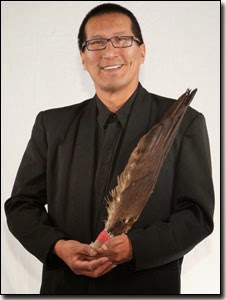
Richard Van Camp
Dogrib
Image Source: Zimbio
http://goo.gl/Zg8TNR


Arigon Starr
Kickapoo
Image source: Starrwatcher Online
http://goo.gl/hyLzhc

S.D. Nelson
Standing Rock Sioux

Beverly Blacksheep
Navajo


Lee DeCora Francis, and her boys
Penobscot 

Simon Ortiz
Acoma


Cheryl Savageau
Abenaki

Donald Uluadluak
Inuit

Jan Bourdeau Waboose
Nishnawbe Ojibwe

Daniel Wilson
Cherokee


Joy Harjo
Mvskoke

Shonto Begay
Navajo

Cheryl Minnema
Mille Lacs Band of Ojibwe

Wesley Ballinger
Mille Lacs Band of Ojibwe

Luci Tapahonso
Navajo


Greg Rodgers
Choctaw

Marcie Rendon
White Earth Anishinabe


Ofelia Zepeda
Tohono O'Odham

N. Scott Momaday
Kiowa

Laura Tohe
Navajo

Allan Sockabasin
Passamaquoddy 

Julie Flett
Metis


Richard Wagamese
Wabasseemoong Ojibway

Leslie Marmon Silko
Laguna


Heid E. Erdrich
Turtle Mountain Chippewa
Deborah Miranda
Esselen

Anton Trueur
Ojibwe


John Rombough
Chipewyan Dene
James Welch
Blackfeet/Gros Ventre

Tomson Highway
Cree


George Littlechild
Plains Cree


Tuesday, May 13, 2014

Cheryl Minnema's HUNGRY JOHNNY

A significant component of the We Need Diverse Books campaign is regarding the authorship of books. For AICL, that means books written and illustrated by Native authors. In the midst of the We Need Diverse Books campaign, I received a copy of Hungry Johnny. Here's the cover:


The author of Hungry Johnny is Cheryl Minnema. She's Ojibwe, and so is the illustrator, Wesley Ballinger. And the story? It is about an Ojibwe kid. Named Johnny. Who is--as the title suggests--hungry!

When the book opens, Johnny is outside playing, but his tummy growls. He's hungry, and heads inside where his grandma is making wild rice. He spies that plate of sweet rolls on the table and makes a beeline for it, but she tells him "Bekaa, these are for the community feast." The word 'bekaa' is in bold on the page. It is one of several Ojibwe words in Minnema's book. Bekaa, by the way, means 'wait.'

As the cover demonstrates, Johnny lives in a modern home. His grandma, in jeans, sweater, and a ball cap, is at an electric stove, and as Johnny plods to another room, we see hardwood floors and photographs on the wall. When his grandmother tells him it is time to go, he leaps off the couch. He wants to eat, eat, eat! As they drive to the community center, he sings "I like to eat, eat, eat. I like to eat, eat, eat."

I've not said anything about a word that appears in the two paragraphs directly above this one. Community. There is a community feast at the community center. Such gatherings and spaces are common across the U.S. and Canada. It is one of the many ways that Native people maintain our traditions and relationships with each other.

At the center, Johnny has to wait again. An elder says a "very l-o-n-g prayer." Perfect! That is exactly what happens. As a kid, it seemed to me forever, too, waiting for elders to finish praying. But, wait we did, and so does Johnny. I gotta share a photo of that page:


See the elder's vest? That particular page highlights Ballinger's connections to his Ojibwe community. That is Ojibwe beadwork--the very kind that Minnema is known for! Here's a photo of some of her exquisite work:


Back to the story...

Elders eat first, so Johnny has to wait. His grandma waits with him, telling him to be patient. He wonders why she's not eating with the elders, and she explains she is a "baby elder" that is "too young to be old and too old to be young."

When Johnny and his grandma are finally at the table, he is crestfallen because the plate of rolls is empty. It is, however, a feast, and another plate of them is brought to the table. Just then, Johnny sees Katherine (an elder) arrive, and calls her over to take his seat. He isn't glum in calling to her. He understands that elders receive special treatment.

Course, this is a community with elders who pay attention to young ones, so, Katherine invites him to sit on her lap. Johnny finally gets his sweet roll.

There's a lot that I like about Hungry Johnny. The Ojibwe words, the teachings imparted, and, Ballinger's art. In 2000, Simms Taback won the Caldecott Medal for Joseph Had a Little Overcoat. I was teaching undergraduates that year in the College of Education. The Jewish students in my class pored over it, pointing to things in the illustrations that affirmed Jewish culture. I didn't notice them, but the students did, and it mattered to them a great deal. That's what Hungry Johnny is like for me, and, no doubt, for Native children who go to community feasts. I imagine Hungry Johnny will be much loved by Ojibwe children who will spot more than I did. What a treat!

Hungry Johnny is published by Minnesota Historical Society Press. A new book, its copyright is 2014. I highly recommend it. When you (parent/teacher/librarian) reads it to a child, you could also pull out a map and show them where Minnema and Ballinger are from: Mille Lacs Band of Ojibwe.

Thursday, May 01, 2014

SLJ's "Diversity" Booklist in May issue includes flawed book about Native people

School Library Journal's much anticipated special issue on Diversity was uploaded today (May 1, 2014) in the midst of the We Need Diverse Books campaign, much of which focuses on promoting books by writers who are not white able-bodied males.

Looking over the list of books they recommend, I am astonished to see Rosanne Parry's deeply flawed Written in Stone on the list. Her outsider perspective is all through that book, and she made up several things (which, she says, is "what fiction writers do"), thereby adding to the already-too-high-pile of misinformation that circulates as information about Native peoples.

Why did SLJ choose here, simultaneously contributing to the invisibility of Native writers?

Why did they go with Parry over any of the 30+ authors of the books on the Focus On list that I wrote for them in November, several of which were singled out for distinction by the American Indian Library Association? Presumably they invited me to write that column (in 2008 and 2013) because they trust my work.

What gives, SLJ?

Additional thoughts:

I know many of you are reading my words and thinking that I'm being mean, that my critique and questions are personal and therefore inappropriate. I understand that concern. Nobody likes being poked or prodded. I don't like doing any poking or prodding, but I did and will continue when necessary, because in this day and age, Native children shouldn't have to read books that make them go 'huh?' A Makah mother told me that her daughter got Parry's book in the library, but they took it back because it didn't make sense. Moreover, non-Native children shouldn't have to read books that add to their already-too-big body of misinformation about Native people. Neither group ought to be encouraged to do craft activities that trivialize Native spirituality, either (the teachers guide for Written In Stone suggests that students make a mask).

Children's books are for children. As adults, that is who I think we ought to keep in mind.

Back in 1999 when Ann Rinaldi's My Heart is on the Ground was published and got rave reviews from the review journals, editors of those journals were taken aback at how wrong they were in their reviews of that book. SLJ asked me to write an article about it then: Authenticity and Sensitivity: Goals for Writing and Reviewing Books with Native American Themes.

So again, SLJ, what gives?

Update May 1, 3:32 PM

The Cooperative Center for Children's Books at the University of Wisconsin published a critique of the entire set of books. It is excellent. I encourage you to read it:
Culturally Generic/Neutral?

Monday, April 28, 2014

We Need Diverse Books that aren't "Blindingly White"

If you're a white male, you'll have an abundance of opportunities to imagine yourself on the stage this year at BookCon. The list of authors is being called "blindingly white" by BookRiot. If you're a white male or a cat, you could imagine yourself on the Blockbuster Kid Lit panel.

If you're not a white male--or a cat--you're out of luck. Rachel Renee Russell, author of the Dork Diaries (which I haven't read), was offered a set of pre-written questions with which to use to interview what Rick Riordan (one of the panelists) called the "Four White Dudes of Kids' Lit" (see his tweet on April 11, 2014). Russell asked to be a panelist instead, and that apparently went nowhere.

If you've been following this situation, you've likely read some of the responses to it. Over the weekend, a new response emerged that involves ACTION. Here's the poster for the We Need Diverse Books event taking place this week:


Perusing the 15 books in that set, it is clear that the planners of the campaign envision diversity in a broad range. It isn't, in other words, just books by or about authors of color, or authors who are citizens or members of one of the 500+ federally recognized tribes. It is about body type. It is about sexual orientation. It is about all of us.

What can you do?

RIGHT NOW (or sometime before May 1), take a photograph that in some way states why you think we need books that represent all of us. The photo can capture whatever it is you want to highlight. The planners suggest holding a sign that says "We need diverse books because _____." Send your photo to weneeddiversebooks@yahoo.com or submit it via the Tumblr page. Starting at 1:00 PM EST on May 1, 2014 people will be using the hashtag #WeNeedDiverseBooks to share the photos.

On May 2, 2014 there will be a Twitter chat--again using that hashtag--at 2:00 PM EST. Share your thoughts on existing problems with the lack of diversity in children's and young adult literature, and share the positives, too.

On May 3, 2014 at 2:00 EST there will be book giveaways and a "put your money where your mouth is" component to the campaign.

Regular readers of American Indians in Children's Literature know that I encourage people to buy books from independent booksellers. My recommendation? Birchbark Books.

The poster (above) includes Eric Gansworth's If I Ever Get Out of Here, which you can get from Birchbark Books.  I want you to get it, but I also want you to get every book on my lists of recommended books. You can start with the lists I put together for the 2008 and 2013 "Focus On" columns I wrote for School Library Journal. Here's the lists:

Native Voices (November 1, 2008)
Resources and Kid Lit about American Indians (November 5, 2013)

Please join the campaign!

Update: Monday April 28 2014, 3: 15 PM

A good sign: BookCon making some changes! Rachel Renee Russell was offered a position on the KidLit panel:


2013: Best Books, High School

If I was starting a library in a high school, these are the first books I'd buy, along with the ten listed in 2010: Best Books, High School.    

Rethinking Columbus: The Next 500 Years, edited by Bill Bigelow

Killer of Enemies, by Joseph Bruchac  Update on Sep 30 2023: I (Debbie Reese) no longer recommend Bruchac's work. For details see Is Joseph Bruchac truly Abenaki?

The Round House, by Louise Erdrich

House of Purple Cedar, by Tim Tingle

Code Talker Stories, by Laura Tohe

The Moon of Letting Go: And Other Stories, by Richard Van Camp

Robopocalypse, by Daniel H. Wilson 

Short annotations for these books are at School Library Journal in a column I wrote for them in November of 2013: Resources and Kit Lit about American Indians.

2013: Best Books, Middle School

If I was starting a library in an elementary school or if I was ordering books for a middle school library, these are ten books I'd buy right away, along with the ten listed in 2010: Top Ten Books Recommended for a Middle School Library.

With these books, students will read the works of Native and non-Native writers who know what they're talking about. 

Trickster: Native American Tales: A Graphic Collection. Edited by Matt Dembicki.

My Name Is Not Easy, by Debby Dahl Edwardson

If I Ever Get Out of Here, by Eric Gansworth

Triple Threat, by Jacqueline Guest

Under the Mesquite, by Guadalupe Garcia McCall

Walking on Earth and Touching the Sky: Poetry and Prose by Lakota Youth at Red Cloud Indian School, edited by Timothy P. McLaughlin; illustrated by S. D. Nelson

Native Writers: Voices of Power, by Kim Sigafus and Lyle Ernst

Super Indian: Volume One, written and illustrated by Arigon Starr

How I Became a Ghost, by Tim Tingle 

Annotations for the books are at a column I wrote for School Library Journal in November of 2013:
"Resources and Kid Lit about American Indians"

Wednesday, April 16, 2014

A Look at Setting in 2013 CCBC Data on Fiction by/about American Indians - US Publishers

On March 17, 2014 I published my analysis of 14 books on the Cooperative Center or Children's Books (CCBC). The set I analyzed are those published by publishers located in the United States. My findings?

  • With one exception (Eric Gansworth's If I Ever Get Out of Here), the books major publishing houses put out are flawed in one way or another. 
  • With one exception (a book I could not get), the books small publishers put out are ones that I can--and do--recommend. 


Today I am pointing to the time period for the books. In short, are they set in the past? Or are they set in the present?

My findings? Of the 13 books I looked at (remember there are 14 total but I could not get one, which means 13 for this look at time period):

When I looked at the set published by large publishers, I found:

  • Books set in the present: 1
  • Books set in the past: 5

When I looked at the set published by small publishers, I found:

  • Books set in the present: 4
  • Books set in the past: 2
  • Books set in the future 1

Another win, in other words for small publishers, for giving us books that portray American Indians as people of the present day.