Friday, November 11, 2022

Ku'daa, University of New Mexico Native Alumni Chapter!

I am deeply honored that the University of New Mexico's Native American Alumni Chapter chose me to receive one of its Outstanding Alumni Awards for 2022.  I received this stunningly beautiful plate, painted by Sherry L. Aragon of Acoma Pueblo


Here's the flyer announcing the gala:


Due to prior commitments, I wasn't able to travel to Albuquerque for the gala, but I did send in a recorded message for them. The gala itself was on the same day as the Brackeen v Haaland oral argument at the Supreme Court on Nov 9. This is what I said:

Good evening. 

This morning, Native people from across the country were gathering in Washington DC or online to listen to the Supreme Court oral arguments in Brackeen v Haaland. 


I’m living in the San Francisco Bay area right now. Wherever I am, I talk about kids and books. or more precisely, the ways that stories in books tell others who we are. That work is why I can’t be with you tonight. I’m in the midst of working with teachers in this area. 


I tell teachers and librarians that our status as sovereign native nations has been left out of popular, classic, and award winning books. Those books shape what people know about us. They shape what the Brackeen’s know about us. Those books are part of why the Indian Child Welfare Act is at risk, right now.


Those books are a threat to our sovereignty. 


I’m grateful to UNM’s Native American Alumni Chapter for selecting me to receive this award. It acknowledges the importance of the work I do to help educators understand what is wrong with those popular and award-winning books. 


And it acknowledges the work I do to bring visibility to Native writers who are creating books that affirm who we are. 


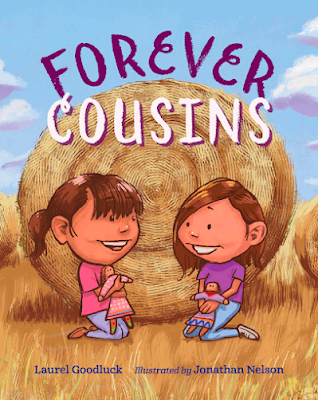
In October, an absolutely terrific picture book by two Native people came out. That book is Forever Cousins. Written by Laurel Goodluck and illustrated by Jonathan Nelson, it is about cousins growing up together in the Bay Area. 


In the Author’s Note, Goodluck writes about the Indian Relocation Act. It is why she grew up in the Bay Area. She also writes about sovereignty! 


I talked about Forever Cousins in a workshop I did earlier this week. After the workshop, one of the participants approached me. She was deeply touched by Goodluck’s book. She is from Tesuque Pueblo, and like Laurel, grew up in the Bay Area. 


Forever Cousins is one book, but it sits amongst a growing number of books by Native writers and illustrators who are creating books that should be in every classroom, and every library.


Like many of you, I’m deeply worried about Brackeen v. Haaland, and, I am confident that as we continue to raise our voices and use books by Native writers, we are disrupting the harms done by older classics that misrepresent who we are. Buy books by Native writers, and talk about them to everyone you know. Help me to bring visibility to books that lift our children and our nations. 


Ku’daa.  


I offer my congratulations to Nicolle Gonzales. She, too, was honored by the Native Alumni chapter. She founded the Changing Woman Initiative. Here's a video of her:


If you are able to support her work, go to the Changing Woman Initiative's website. Down at the bottom of the page is a Donate button. 

Sunday, November 06, 2022

"Never fear," said Gramps. "My great, great grandmother was one quarter Native Bear and I am ready to share."

This morning on Twitter, I saw a tweet that included a photo of a page from a Berenstain Bears book. The person who shared it characterized it as 'yikes' and most of the people who commented about it agreed. Because a lot of what we see online is satire or parody, I wondered if someone was playing around with the Berenstain Bears books. 

Some of the books have stereotypical content and are cringeworthy. In Berenstain Bears Go to Camp (published in 1982 by Random House) shows Grizzly Bob in a feathered headdress and fringed buckskin. In Berenstain Bears Give Thanks (published in 2009 by Zonderkids, a Christian publishing house) the bear family has a turkey named Squanto. This is supposed to be their dinner on Thanksgiving Day but Sister Bear objects and they decide to keep Squanto as a pet. 

I looked for the book where Gramps says his great, great grandmother was "one quarter Native Bear" and found it right away. It is in The Berenstain Bears Thanksgiving Blessings. Like Berenstain Bears Give Thanks, it is from Zonderkids, the Christian publishing house. It came out in 2013.

Thanksgiving Blessings is one of the too-many books that puts forth the feel-good Thanksgiving story (in this one, the "Native Bears" gave the "Pilgrim Bears" food and they all shared in a great feast), but it is also one of those that goes a step further by having a character claim to be Native. That character talks about what they will "share" with others. Some readers will see "share" and think it is a good moral lesson, but some of us read that and see it as an attempt to depict harmony that looks away from the facts of history.

Here, it is Gramps saying that his great, great Grandmother was "one quarter Native Bear." Here's a screencap of the page (I put the red arrow there to draw your attention to Gramps and this bogus claim):


And here's the text on that page:
The whole family helped set the table. It was, indeed, a magnificent Thanksgiving feast. 
"It's a shame there aren't any Native Bears here to share it with us," said Brother. 
"Never fear," said Gramps, seating himself at the head of the table. "My great, great grandmother was one quarter Native Bear an I am ready to share. Let's eat!"
If you follow Native people on social media, you know that there are many conversations about people who claim they are Native. Social media makes it possible for this topic to be more visible than ever before. 

I ran into these claims a lot in the 1990s when I was a student at the University of Illinois, Urbana-Champaign (UIUC). It had a stereotypical mascot they called "Chief Illiniwek." Before I arrived there, Native students, staff and faculty had been asking the university to get rid of it. 

Without fail, we encountered fans who claimed that they are part Native and--with that claim to Native identity--said that the mascot was a good thing. Some of them may have had an ancestor, but some of them were simply recounting family lore, and were using that family lore to dismiss Native people who resist being stereotyped and misrepresented via mascots, children's books, television shows, and movies. 

That dismissal is precisely what I see in Thanksgiving Blessings. Obviously, Mike Berenstain (his parents launched the Berenstain Bears books in the 1960s), uses Gramps and his "one quarter Native Bear" as an attempt to validate the bogus Thanksgiving story. 


If you have a family story that tells us an ancestor was Native and you have no idea what that ancestor's nation was, and you speak from that space of not-knowing, I urge you to stop doing that, especially if you're doing it to counter Native people who speak up about stereotypes, and/or biased and inaccurate information. You are harming the very people you claim to be. You are undermining us. Please stop! 

To learn more about fabricated or unsupported claims to Native identity, you can read through resources I've compiled: Native or Not? And if you see that sort of thing in a children's book, please let me know!


Saturday, October 15, 2022

Dear Kate: An Open Letter to Kate DiCamillo (and Authors of Children's Books)

Update from Debbie on Monday, Oct 17, 2022: Kate DiCamillo responded to me, sharing my letter on her Facebook page. I deeply appreciate her response. Ones like it make me hopeful! Scroll to the bottom of my letter to read her response. 
_____

October 15, 2022

Kate DiCamillo
https://www.facebook.com/KateDiCamillo

Dear Kate,

You and I have never met. I'm tribally enrolled at Nambé Owingeh, a sovereign Native Nation in the southwest. In the early 1990s, I moved from Nambé's reservation to Illinois where I began working on a PhD in the College of Education at UIUC. My husband and our little girl went, too. Since then I've written book chapters and articles about depictions of Native peoples in children's books. In 2018, the American Library Association announced that I had been selected to deliver the 2019 Arbuthnot Honor Lecture. I'm pretty sure you know about the Arbuthnot. 

In 2005, I launched American Indians in Children's Literature, and I use it to do in-depth analyses of children's books. Sometimes--like now--I use it to speak directly to a specific author. 

I read Because of Winn Dixie at some point and had positive feelings about it. More recently I realized that it featured Gone With the Wind. And so, on June 17, 2016, I added it to my page, Books that Reference Racist Classics. And then in 2021 I learned that you had removed Gone With the Wind from your book. That was a good decision. I assume you had engaged in conversations with people who asked you to reconsider using it. 

Earlier this week (October 12, 2022) on your Facebook page, you wrote about being with friends and talking about books you and they loved when you were kids. 


You listed books people mentioned, including Island of the Blue Dolphins. As your conversation continued, you talked about how you had learned about those books. Many talked about how it read aloud to them in class. They remembered the teacher who read the book, too, and you wished those teachers could have heard you talking about those memories. 

You noted that reading aloud is a gift. On that, I concur. I have many warm memories of reading aloud to our daughter on our travels from New Mexico to Illinois. 

You closed your Facebook post with
[T]hank you, Mrs. Boyette, for reading Island of the Blue Dolphins to our second grade class.
For you, and the thousands of people who embraced and shared your post, Mrs. Boyette's reading aloud to you is a positive memory but for Native kids--especially ones who are Aleut, memories are not positive. Here is a thread by Dr. Eve Tuck, recounting her experience (I have her permission to share it). She did the thread in response to my critique of the book.

I appreciate the thorough analysis that has done here. As an Aleut person, I can say that the inaccuracies depiction of Aleut people in this book meant that non-Indigenous people said a lot of painful and ignorant things to me, especially as a kid.
I was a kid growing up in a white rural town in Pennsylvania, and usually ours was the only Native family in the community. I attended a school that had multiple copies of this book in classrooms, the library. I remember there even being a door display of this book.
So I grew up in a white community that only knew of Aleuts (Unangan) from this book.
I was taunted for it. I was asked by children and teachers to explain why Aleuts were “so mean.” And no matter what I said about my family, especially my grandmother, it wasn’t believed.
The book was believed over my real-life knowledge of Aleut people.
Fictionalizing an Indigenous community to make them the violent device of your plot line is a totally settler thing to do. O’Dell had no business writing a word “about” our people.
The book says nothing about us. Like Gerald Vizenor’s analysis of the figure of the ‘indian,’ it says more about the violent preoccupations of the settler, and says nothing about Unangan.
The last thing that I will say is that when I think about colonial violence that Aleut people were *actually* experiencing in their/our homelands in the time period that the book was set, it makes me doubly angry about the falsehoods depicted in this book.
But that would never be a best seller.

I'm writing this letter to you today, Kate DiCamillo, to ask you to extend the action you took regarding Gone With the Wind. Teachers are still using Island of the Blue Dolphins. Native children are negatively impacted, and everyone is being mis-educated by the contents of that book. 

Would you please revise your post, asking teachers not to read Island of the Blue Dolphins aloud, and tell them why they should not? Being able to tell them why they should make a different choice will mean that you need to read my critique. Revising your public remarks about the book is important. You would take a leadership role in doing so. You could speak about this at conferences. You and other writers with large followings could be a force for change! 

I'll close with a note to my readers: if you know DiCamillo, please give her a link to this letter. Consider writing to her, yourself. If you would like to comment to me, please do. I welcome thoughts from those who revisit their warm embrace of books. Please refrain from submitting comments that tell me I'm wrong. 

Sincerely,

Debbie Reese
Founder, American Indians in Children's Literature
Twitter: @debreese
 
_____

At 9:48 AM on October 17, DiCamillo responded to my letter. She wrote the following on her FB page:
When I talk to kids about writing, I tell them that one of the most important tools a writer can cultivate is their ability to listen to other people—to be curious about what other people think, and why.
Last week on this page, I wrote about the powerful experience of having a teacher read a book aloud to a class.  
I thanked my second-grade teacher for reading us Island of the Blue Dolphins.  
After that post, Dr. Debbie Reese, founder of American Indians in Children’s Literature, wrote to tell me about how and why Island of the Blue Dolphins has caused pain.  
I read her letter and her article on Island of the Blue Dolphins and what I thought was: EVERYONE needs to read this, so I’m posting her letter here.
Thank you, Dr. Reese. 
I wish Mrs. Boyette had had the chance to read this letter, to know these things. 
And I am grateful to her for reading aloud to second-grade me.

Monday, October 10, 2022

Highly Recommended: FOREVER COUSINS written by Laurel Goodluck; illustrated by Jonathan Nelson

 
HIGHLY RECOMMENDED!
Forever Cousins
Written by Laurel Goodluck (Mandan, Hidatsa and Tsimshian member)
Illustrated by Jonathan Nelson (Diné)
Published by Charlesbridge
Publication Year: 2022
Reviewer: Debbie Reese
Status: Highly Recommended

****

As I turned the pages of Forever Cousins, I thought back to the early 1990s when we left Nambé's reservation to go to graduate school in Illinois. Our daughter was three years old. She and her cousins were in tears. The always-present playing options were about to change. 

When you start reading Forever Cousins, you'll meet Amanda and Kara and to a lesser degree, Forrest. You'll learn a lot about them. The two girls are together all the time. Sometimes they're doing things most kids in the U.S. do--like make jelly sandwiches--and sometimes they're doing something Native kids do, like dancing at a powwow. On the cover you see both girls have dolls. Those are quite special! They were made for them by their magúu (the author's note tells us that magúu is a Hidatsa word that means grandmother).

We learn that they live in a city and that Kara and her family are moving from the city to the Rez. They'll see each other in a year. A year! In subsequent pages we see the two, both feeling alone while doing the same activity. Amanda is at a powwow in the city (we see tall buildings in the background), holding her doll close as she sits on a folding chair. Kara is at a powwow on the Rez (we see low hills in the background). Her mom offers her some fry bread but she just hugs her doll and shakes her head.  

Throughout, Nelson's illustrations set the story very much in the present day. That's especially evident on the page where the two girls talk to each other using a video platform on their cell phones. Like anyone, we use all the forms of literacy and communication available to us! I like that but I also like the page where Amanda gets a post card from Kara. Finally it is time for Amanda and her family to hit the road! It'll take two days to get to the Rez. Nelson shows us their joy when they cross a state border. That made me smile. When we drove from Illinois to Nambé, we'd cheer just like that when we crossed from Texas into New Mexico! 


Amanda and her family arrive at the reunion, and after some initial shyness, the cousins have a great time and we see the families gathered while a new baby gets his Hidatsa name. It is then time to say their goodbye's. 

The story Goodluck and Nelson share in the pages of Forever Cousins is a joy to read and look at. Like the recent books by Native writers, it has an extensive Author's Note that provides teachers with information that helps them understand why Amanda and Kara and their families aren't on the reservation when the story starts. In her note, Goodluck says that the characters in her book represent her and her cousins growing up in the 1960s and 1970s in the Bay Area suburbs of California. She shares some background about her family and cousins and how the city and the Rez were both home and community. She says:
As a matter of fact, we are dual citizens: first enrolled members of sovereign Tribal Nations and then citizens of the United States. The term "sovereign nation" means a Tribal Nation that governs itself. If it is federally recognized, then it has a governmental relationship with the United States as a nation with a nation.
Those of you who know me probably guess that my heart is soaring as I read those sentences! Teachers: download Affirming Indigenous Sovereignty: A Civics Inquiry by Sarah B. Shear, Leilani Sabsazlian, and Lisa Brown Buchanan. It'll provide you with ideas on how you can incorporate tribal sovereignty into your classroom. 

In the portion of her note titled "From the Reservation to the City" she tells us that her parents moved from their reservation to the city because of the Indian Relocation Act of 1956. It was a federal program that was described as a way for Native people to move to cities and get vocational job training--but there was more to it than that. Goodluck writes:
In actuality, the federal government wanted to erase Native culture by moving Native people to cities so they would adapt to the lifestyles of white people. 
I am so glad to see that sentence in this book! This is the honesty that ought to be in every book! 

She goes on to say that her parents were able to get jobs in the city, but that the government promise of a job did not work for most tribal people. They endured discrimination and racism. I have uncles and aunts who moved to cities for jobs. Some got those jobs and stayed in those cities, others came back very soon. I suggest you read Indian No More because it, too, is about this relocation program. 

I'm sharing the final paragraph in the note because it is so very powerful:
The treatment of Native Americans in the United States was and sometimes still is despicable. But as with the family in this story and with my own family, unjust experiences forge tight bonds between us and make us strong. Our resiliency is rooted in our ceremonies and culture. We have a deep love of home. The land reminds us of our ancestors, storytelling helps us make good decisions, and we continue to have love and loyal family connections that are unbreakable.

Forever Cousins is tribally specific. Both, the author and illustrator, are Native. The story is set in the present day. It can--and should be--read year-round (not confined to a heritage month or day). It is getting a 'highly recommended' label from me, but my enthusiasm for the book is much more than a 'highly recommended' label conveys. With this story and the note, Goodluck and Nelson give teachers or parents information that they can carry with them when they close this book and choose another one that features Native people. They see us as people who live in a city or on a reservation. They can see us as people whose identities and lives as Native people are central to who we are, and who share the same sorts of joys and fears that kids of other cultures do, too. 

Forever Cousins is one of the best books I've read. I'm delighted to read it, to write about it, and to recommend it to everyone.


Monday, August 15, 2022

Debbie--have you seen YOSSEL'S JOURNEY by Kathryn Lasky?

A reader emailed to ask if I've seen Yossel's Journey by Kathryn Lasky. Published by Charlesbridge, it is due out in September of 2022. Here's what I've found so far (I don't have the book but will look for it:) 

Here's the book description from the book's page at Charlesbridge:
When Yossel’s family flees anti-Jewish pogroms in Russia and immigrates to the American Southwest, he worries about making a new home and new friends.

In his family's new store next to the Navajo reservation, Yossel watches their neighbors pass through. He learns lots of words, but he's still too afraid and lonely to try talking to anyone. Making new friends is hard, especially when all your jokes are in a different language. 

A historical picture book about the power of cross-cultural friendships and the joy of finding out the true meaning of home.

The description centers one family but makes no mention of the Navajo child Yossel becomes friends with. His name is Thomas. The story is from Yossel's point of view but I wish the description from Charlesbridge didn't leave out Thomas's name. It is a missed opportunity to nudge readers from the amorphous image of Native people that they likely hold. 

I see reviews from Publishers Weekly and from Kirkus. Both are mostly favorable but these lines stand out. The reviewer at Publisher's Weekly said 
"An author's note and further reading conclude but elide discussion of the government's displacement of Navajo people." 
The reviewer at Kirkus said 
"Given Yossel's history as someone forced to flee his home due to ethnic violence, it's a surprise to see none of the parallel story for Thomas (during roughly the time of the forced deportation of the Navajo by the U.S. government). Instead this is a pleasing, sun-drenched tale of friendship in a new place." 
Over on the Charlesbridge page you can see some interior pages and a review from the Jewish Book Council that tells us the story doesn't have "heavy-handed statements about brotherhood." I'm glad to know it doesn't do that! I've reviewed some of those historical friendship stories and have yet to read one that works. 

One of the interior pages tells us that Yossel and his family are going "near a Navajo Indian Reservation. It is called Two Red Hills." a reservation called "Two Red Hills." Is that a real place? I'm going to talk to Navajo friends and colleagues about that. I know for certain that Jewish people had stores on reservations, so, that part of Lasky's story is based on fact. But is there a Two Red Hills reservation? Editing on August 17 to say that I got a copy of the book and that the author's note states the location is fictional. I added the quote and strike thru at the start of this paragraph today when I got a copy of the book.  

I'm glad to see reviewers noting the omission of Navajo history. As noted, the story is from Yossel's point of view and it likely seems clunky to try to work the Navajo history into the story itself, but I think the reviewers are correct in pointing out the problems of leaving out Navajo history when the entire story is launched due to persecution of a family that ends up on homelands of the Navajo Nation and its people. 

I'll see if I can order the book from a local library and I'll be back with a review.


Thursday, August 11, 2022

Update on STILL THIS LOVE GOES ON by Buffy Sainte-Marie, illustrated by Julie Flett

Note from Debbie on November 12, 2023: I am withdrawing my recommendation of Still This Love Goes On due to an October investigation into Sainte-Marie's identity. I have compiled a list of articles, primarily from Native people, and hope you will read them. There's a lot to go through, and a lot to unlearn and learn. 


Still This Love Goes On
Written by Buffy Sainte-Marie (Cree)
Illustrated by Julie Flett (Cree-Metis)
Published by Greystone Kids
Published in 2022
Reviewed by Debbie Reese
Review Status: Highly Recommended

If Still This Love Goes On is not on your must-buy list yet, put it there right now. Better yet, order it, right now! 

You can read it as a book about seasons. You'll see people and animals on wide landscapes of snow, or fields of grass and flowers... Or, with the references to sweetgrass and drums and jingle dancers, you can read it as a book about Native people. Or, you can sing along with Sainte-Marie! You'll find her singing it on her album, Running For the Drum. If you read music and play an instrument, you can turn to the sheet music at the end of the book.  

Anyone who listens to Native musicians will recognize the name, Buffy Sainte-Marie. Anyone who reads and shares picture books by Native writers will recognize the name, Julie Flett. In other words, Still This Love Goes On is a magnificent gift to us all. 


Monday, August 01, 2022

Acknowledging the 1992 Returning the Gift Festival of Native Writers

The "Returning the Gift" (RTG) conference that took place in Norman Oklahoma in July 1992 is widely recognized by Native writers and scholars for being an early and significant gathering. Geary Hobson and Barbara Torralba Hobson are among the founders of that literary festival. Here's a photo of the people who attended:


When I look over the names of people who were there, I see many who were, and are now, writing for children: Joy Harjo, Jeanette Armstrong, Bernelda Wheeler, Simon J. Ortiz, and Eric Gansworth. By 1992, Wheeler and Ortiz had written several books for children. Wheeler's Where Did You Get Your Moccasins is one of my all-time favorite books! It came out in 1986. 

In 2017, RTG had its 25th anniversary gathering. I attended, gave a presentation on children's books, and moderated a panel of four Native writers who have been writing for children: Marcie Rendon, Traci Sorell, Tim Tingle, and Art Coulson. At that gathering, the 40th anniversary edition of The People Shall Continue was launched. Written by Simon J. Ortiz and illustrated by Sharol Graves, it too is among my all-time favorite books. 

Celebrating and acknowledging key moments is important. I'll add 1992's gathering to AICL's list of Milestones. 


Saturday, June 04, 2022

Centering and Featuring Native Languages

In 2007 I saw a graphic that--at the time--I felt was terrific. I shared it everywhere. Created by the Tulsa City-County Library, it had the word 'read' in the center. Around it was the word 'read' in several different Native languages. 

Then last week, I watched a video of Dawn Quigley and Joaquin Munoz, speaking at the Indigenous Teacher Education Program at the University of Arizona, College of Education. Most of you know Dawn as a Native author, but she's also a professor. Click through and listen to the entire lecture. Professors Quigley and Munoz have terrific information to share! In his remarks, Munoz talks a bit about Cherie Dimaline's The Marrow Thieves. He's co-author on an excellent article you can download about her book: Ni keehtwawmi mooshahkinitounawn: Lifting Up Representations of Indigenous Education and Futures in The Marrow Thieves

In one portion of her remarks, Dawn talked about having a critical lens. That is what AICL is about: bringing a critical lens to the ways that Native peoples, cultures, languages, stories and songs are represented. 

Dawn closed her presentation by sharing the 'read' graphic and saying that "the English word 'read' should not be in the middle." Just before that, she said it is an amazing graphic. It is! I love seeing Native languages. I am guessing that she--like me and so many others--think Native languages should be more visible. And, she's right to say that the English word should not be in the middle! If we want to center our languages, we have to bring that critical lens to the 'read' graphic. 

So--here's my decentering of that graphic. I put the Tewa word for 'read' in the center (Tewa is the language we speak at Nambé). [Update on June 17th: Sue Anderson from the Tulsa City-County Library wrote to say "We are happy to give permission for others to use this image, provided they credit the Tulsa City-County Library and leave our tagline on the graphic."]


Earlier this year when signing bookplates for An Indigenous Peoples' History of the United States, for Young People I wrote our word and my Tewa name on the top half of the bookplate, and on the bottom half, I wrote 'read' and signed 'Debbie Reese.' (If you happen to have one of those, could you please take a photo of it and send it to me? I didn't take a photo of the bookplates before sending them on to Minnesota for their Indian Education conference.)

Adding on June 6th, a photo of the bookplate! 
Kú'daa, Odia Wood-Krueger, for the photo!


Related to how Native languages are treated in books, we wrote about that in An Indigenous Peoples' History of the United States, for Young People. In our "A Note To Readers," we said:
For a long time, textbooks and other print media have put non-English words in italics. Setting words apart in that way signals that English is the normal way to speak and write and other languages are “different.” But many people now see this use of italics as a way of “othering” languages and the people who speak them. We are strong advocates for the shift away from italics. You will not see Native words in italics in this book.
When you read Dawn's books, you'll see that she does not italicize Ojibwe words her characters use, except when she's explaining a word to the reader. Look at this passage on page 3 of Jo Jo Makoons: The Used-to-Be Best Friend when Jo Jo is on her way to school:
Mama usually walks with me, but today my kokum was going to. Kokum is another way to say "grandma" in the Michif language. She moved in with us after my moushoom died last year. 
A page earlier, we learned from Jo Jo that moushoom is their word for grandpa. When you read Eric Gansworth's books, you'll see that he used italics--for German words--in If I Ever Get Out of Here. Here's a passage from page 13 where his main character, Lewis, is visiting George, a white boy that Lewis is becoming friends with. Lewis loves music and is looking at albums on the shelves at George's house (p. 14):
"You like the Beatles?" I said. "We had pretty much all of their albums, but when my brother moved out, he took most of the later ones with him."

"We have them all," George said. "My dad's a huge Beatles fan. When we lived in Germany, he took me down to the Reeperbahn in Hamburg, because that's where they got their start. My Mutti about busted a blood vessel." 

"'Mutti'?"

"Sorry, German, it's like 'mom.'"

And when you read Brian Young's Healer of the Water Monster, you'll see he uses Navajo words for numerals in the chapter titles: 


These are definitely signifiers of change in children's book publishing! In my lectures and workshops, I encourage teachers to modify texts they use with students in their classrooms. I encourage them to give students reasons for the modifications and I also recommend they make modifications in front of students so that students can learn that books are not sacred. Words in them can be crossed out, and new ones inserted or added somehow to visually signify a shift. With my modification of the 'read' graphic, I'm decentering English. Said another way, I'm centering or featuring Tewa. 

I'm going to write to the staff at Tulsa City-County Library to let them know of my modification and ask if they might let us all use their original graphic, overlaying 'read' with a Native language -- either our own or one spoken by the people a library's homelands are located on. You can also make your own large poster and ask Native people in your service area how they say 'read' in their language. 

Monday, May 30, 2022

Questions about Liam McDonald (author of middle grade book, TRUE HISTORY: INDIGENOUS AMERICA)

On Friday, May 27, 2022 at 11:08 AM Native America Calling shared the following announcement about Liam McDonald, who was scheduled to be their guest that day:
We acknowledge we didn't adequately research the controversy over Liam McDonald's (OPLIAM) tribal affiliation claims before framing our Friday (May 27) show as a celebration of his music. 

We regret not grasping the controversy sooner.

Once we learned of it, we hoped to reframe the discussion and have him answer criticisms about those claims.

We feel that discussion is important and informational for everyone.

Unfortunately, McDonald decided against participating in that forum, so we're forced to change directions in the immediate future.

We hope to schedule another day so McDonald and his critics can air out what appear to be very legitimate questions about his purported Mohawk identity, and the importance of referring to identity in the most accurate and authentic way possible. 

I listen to the show--and recommend it--as a way people can learn more about Native peoples. Many topics there can help editors be more adept at editing Native content in books. 

Additional information was shared in Native social media. I learned that McDonald has a middle grade book coming out on August 30 from Penguin Random House's "Workshop" imprint. That book is titled True History: Indigenous America. 

I have not seen the book yet. Like the people at Native America Calling, I think McDonald has to address these criticisms. To me, it does not matter how well the book may be written. An author's integrity is fundamental to providing young people with books with Native content. 

Here's a screen capture of Native America Calling's announcement:


Monday, May 23, 2022

Highly Recommended: IT'S A MITIG by Bridget George


It's A Mitig!
Written and illustrated by Bridget George (Kettle & Stony Point First Nation)
Published by Douglas and McIntyre
Published in 2020
Reviewed by Debbie Reese
Review Status: Highly Recommended

****

This morning, I came across It's A Mitig! Written and illustrated by Bridget George, it is absolutely terrific! On the cover, you see a hand that is holding a magnifying glass. Turn the page, and you see that the story starts with morning time:
Giizis is rising, the day is brand new. Let's learn some words nature's gathered for you.
Right away, we are told what to expect. We'll learn some words---in Ojibwe, and we'll do it using rhyming words (new/you). Sometimes, the rhyming words are in English and Ojibwe, like on this page (log/gaag):


I love every page! The text on the final page of the story is:
Dibiki-giizis is glowing and bright. You've learned many new words, now it's time for goodnight. 
I'd be using this if I was teaching in an early childhood classroom, or in a language course, or with a child in my family sitting next to me. The final pages include a pronunciation guide, and one that functions as a picture book dictionary:


As I look at that page with all the items and their Ojibwe words, I think about how I might extend that with a different language. If I used Tewa (the language we speak at Nambé), I might say something like "The Ojibwes say giizis. We say than."

There are interviews with Bridget George in several places. In them she talks about how she was setting up a nursery for her baby and that it was hard to find what she wanted: books with Ojibwe words and characters. Her search is familiar. Many Native writers create the book they wanted, either as a child or an adult, because they weren't finding what they wanted. 

On some pages, George includes people. Here's an adult and child, sitting by the ziibi, reading:


I'm sharing that particular page because of the way George depicts them. These are clearly people of the present day. Regular readers of AICL know that I am especially keen on books that depict us as people of today! 

It is all here: Native author, Native characters, set in the present day, includes Native language... it is so very good! I'm delighted to see it. I highly recommend you get it. And keep an eye out for Bridget George's books! I see she's doing Too Much with Laurie Goodluck. It'll be published by Simon & Schuster in 2024.