Tuesday, October 01, 2019

Recommended: THE CASE OF WINDY LAKE

I've really enjoyed Marcie R. Rendon's first two Cash Blackbear mysteries. Marcie (White Earth Anishinabe) writes them for adults, but older teens will also find them engaging. I recommend them. They aren't the focus of this post; just wanted to mention Murder on the Red River and Girl Gone Missing before moving on to the actual topic.

Michael Hutchinson is a citizen of the Misipawistik Cree Nation, and his The Case of Windy Lake (Second Story Press, 2019) is the first installment in the Mighty Muskrats Mystery series.

Hutchinson's Mighty Muskrats are four cousins--Atim, Chickadee, Otter, and Sam-- who live on the Windy Lake First Nation (pretty sure this is a fictional location) in what's currently called Canada. These tweens are smart, curious, and resourceful. They operate out of an incapacitated school bus on the outskirts of their reservation community.

It's tempting to do a chapter-by-chapter look at what makes this book so appealing -- but with mysteries, that can mean spoilers. So I'll just sum up.

The first case the Muskrats take on is the disappearance of an archaeologist who was working for a mining company in the area. There's a subplot involving a beloved older cousin who actively opposes the mining company's actions that she knows will endanger the community's water supply. A lot of Indigenous communities have dealt with well-educated fools coming in to study them, and lots of Native kids have relatives who are involved in Indigenous environmental rights (and they may be activists themselves). The book's main antagonist is a white mine manager; when he talks to the kids and their family members we see the same entitled hostility and disrespect Indigenous people encounter in real life today when they stand against exploitation and destruction of their resources.

The kids use the internet as well as knowledge of their community and their natural surroundings to solve the mystery, and they don't get in the way of law enforcement (their uncle) or need to be rescued. There's a nice all-for-one-and-one-for-all feeling about their relationships. For example, when they're about to go get information from someone in a restaurant, Atim says he's hungry. Chickadee asks, "Do we have any money?" and Otter pulls some from his pocket. They count it ... triumph! They can split an order of fries and a pop, and that's fine with everyone.

 Details add to the sense of place, as in Hutchinson's description of that restaurant:
The jukebox was playing "Love Hurts" by Nazareth. Scarred and scuffed blue-and-once-white tiles covered the floor. Sun streamed in from windows that overlooked the gas pumps, the parking lot, and the trucks buzzing north up the highway.... Half the restaurant was occupied by First Nations people hunkered over cups of coffee. A few tables held non-local miners and highway travelers. Laughter was coming from most tables and jokes were being shared between a few. The quiet tables held smiling Elders. 
The author's ability to show the reader a scene or a relationship is likely one reason The Case of Windy Lake won the Second Story Press Indigenous Writing Award.

Anyone looking in this book for a dysfunctional fictional rez community will have to look elsewhere. The people of Windy Lake have their troubles, but ties within families and between neighbors are solid and caring. And the resolution of the mystery is ... affirming, and that's all I'll say about it. You'll just have to read it to find out more. Then we can wait together for the next Mighty Muskrats book.

EDITED 10/3/19 with good news from two commenters. Val (10/2/19) notes that you can read the first chapter of The Case of Windy Lake on the Second Story Press Web site! And Cheriee Weichel reports that the sequel, titled The Case of the Missing Auntie, will be available in March 2020.

Edited 10/18/19 to add a link to CBC coverage of The Mighty Muskrats!

--Jean Mendoza

Sunday, September 29, 2019

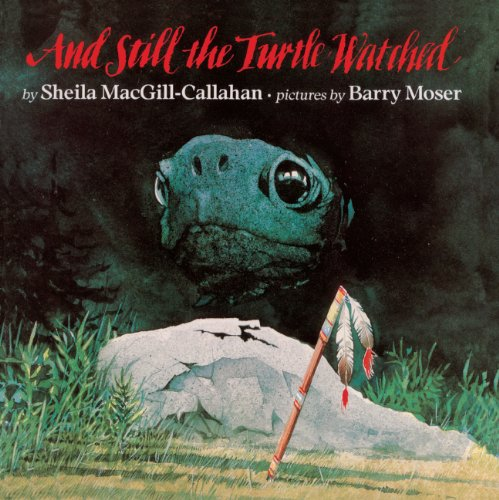
Not Recommended: AND STILL THE TURTLE WATCHED


I often do a Twitter review of a book -- which means I write and send tweets as I read the book. I did that yesterday as I made my way through And Still the Turtle Watched. 

I try to compile those twitter threads here, on AICL. I usually do some light editing to make them flow a bit better than they did on Twitter. Beneath the image of the book cover and the "Not Recommended" rating, you'll find my Twitter review. It is rough--unfolding as I went. I hope it makes sense! If not, let me know. 


****


This morning, I was asked about AND STILL THE TURTLE WATCHED. Do I recommend it? (No.)

Written by Sheila MacGill-Callahan and illustrated by Barry Moser, it came out in 1996 from Puffin Books.

I found it on an episode of Reading Rainbow. So... twitter review! There's several videos of that episode on Youtube. I don't know if RR is ok with that. As the episode opens, I see this thread is also going to critique how RR produced the segment.

It opens with Levar in a forest. The music is flute, some bells, drums... (me: sigh)

Levar says that hundreds of years ago, Indians "lived here" in a forest in western America. I hope this entire segment doesn't stay in that past tense. 

Levar says white men came to their lands and took it and its riches. The forest and its creatures watched. The book in the segment (AND STILL THE TURTLE WATCHED) is about one of those creatures. 

[Me, groaning as I continue to watch the video]... More drum and flute and then someone starts to read the book in a deep kind of fake Indian voice... [sigh] It is Michael Ansara, an actor who played a lot of "Indians" on TV and in movies. [I'm sighing but trying not to laugh, too.]

Reading Rainbow is back, isn't it? Are they on twitter???

[Goes to look....] Yeah, they are.

@readingrainbow -- please don't do this sort of thing again. 

Ok, so Michael Ansara starts reading the story.

"Long ago when the eagles still built their nests along the river" (I guess they weren't doing that in 1996), an old man and his grandson stood beside a large rock. [I guess I could be glad it says "old man" and not "a shaman."

Old man says he's gonna carve that rock into turtle, who will be the eyes of Manitou. He will watch the Delaware [but... shouldn't he watch those white fellas?] and be their voice to Manitou. He tells the boy that he'll bring his children (and they'll bring their children) to that turtle. Old man got to work, making the turtle. "And then, the turtle watched" the seasons change from one to another. But he was happiest in summer when the children came, and then their children's children, and then their children's children. But as time wore on, fewer children came to greet the turtle. He wonders if he "watched badly. Does Manitou no longer hear me?"

Pausing the vid to say that the author is taking some huge liberties in writing all of this. Is it supposed to be a "myth" or a "legend"? Looked it up on WorldCat. Not seeing anything that says "Indians of North America" but there's no doubting that people think this is a Native story. With that turtle and spear on the cover, you know that's what they were going for:


Several libraries near me have it on the shelf... does it still circulate? Is it getting used in storytimes.... in your library? Or school? 

Dictionaries tell me that "manitou" is a spirit or force. The author says the people in her story are Delaware. She's creating words for what she thinks is a Delaware spirit or force. She was born in the UK. Guessing she was White (she is deceased).

Back to the vid. "... one day, strangers came. They did not greet the turtle." The stranger shown is a farmer and horse. "They did not speak to Manitou." They chopped down trees; turtle watched and "does not understand." More strangers came. Now there's a city.

He watches the water turn brown; at night lights glowed "near the ground" and he can't see the stars in the sky. He gets sad. "Why watch?" he says. "My children have not come for many moons."

Then one day some boys come to the rock. They're in black leather jackets. They point at him. He gets happy. He thinks they're children who have come to see him. "Thank you, Manitou" he says. Then he heard a sound. He feels cool wetness on his eyes. He can't see anymore.

The sound is a can of spray paint.

"He cannot watch for Manitou!" 

His heart cracks. Days, months, years pass. Nobody watches for Manitou.
You're supposed to feel sad. It is a sad story but it is SAPPY WHITE MAN INDIAN stuff.

Where, I wonder, did that old man's children go? They've just disappeared. 

That hokey Hollywood drum beat is in the background during these sad bits. Then, a man comes! He knows the Delaware "once summered here." He's got a shovel. He hopes to find something "they left behind."

Sigh. Past tense verbs

He looked all day and found nothing. He was tired. Then he saw the rock! Covered with graffiti. The turtle didn't know the man was there. That paint had blinded his eyes. He felt the man's hand on his shell. 

The man came back with workmen. They put the rock on a truck, unloaded it somewhere else. He feels them working on him. His eyes start to clear and he can hear again. He's not outdoors anymore. He's inside at a botanical garden where children come to see him. And they will bring their children and their children's children. And he "will speak of them, to Manitou."

Some of you know I caution you for making judgments on a child's identity based on what they look like. I hold to that--but in this case,
 I am confident in saying that the author didn't mean for us to think the kids on the last page are Native. For her, Native people are extinct.

NOW: if you're a teacher who might, in fact, have Delaware children in your class, how do you think THEY feel abt this story? 

The story is over, and we're back with Levar who tells us that the Delaware people in the story chose turtle to watch because they think he is wise. He goes on to talk about other animals and "legends."

The episode shifts to a segment about eagles and people who study them. At the end, Levar is back in that forest breathing the fresh air. The RR shows ended with book recommendations. This one includes A RIVER RAN WILD (I don't rec that one either). The next recommendation is THIRTEEN MOONS ON TURTLES BACK by Bruchac. I'll have to look for that one. Update on Oct 3 2023: I no longer recommend Bruchac's work. For details, see Is Joseph Bruchac truly Abenaki?

Circling back to why I started this thread: I do not recommend AND STILL THE TURTLE WATCHED. It looks like a Native story, but is it, really? Or is it something the white (British) writer made up?

What happened to the Delaware people in the story? They just disappear. 

But they didn't. You know that, right? 

Readers are supposed to feel bad for the turtle being abandoned by the Delawares and then abused by those boys who graffitied him, but then we're supposed to feel good that a white guy rescues the turtle and puts it in a garden. But if there really was a turtle like that, I think that the Delaware people might want it left alone--not hauled off to a botanical garden. I know--ppl think "garden" and think that's fine but truly, taking Native items is a no-no. Don't do it! 

A lot of writers use Native themes in stories about care of the environment. Those stories, however (and there are several) show Native people as gone. They fuel a factual error about our existence. We're still here. (And it grates to say "we're still here.")

Back with more to say about AND STILL THE TURTLE WATCHED. I found another video of it online. Seems that the Reading Rainbow version leaves out some of what I'm seeing in this second video. 

The Reading Rainbow version doesn't include the last page, which tells readers that the turtle is in the Watson building at the New York Botanical Garden. I looked around a bit and found an article in the New York Times, dated March 25, 1988 about a box turtle petroglyph. 

From the article I learned that the New York Botanical garden is huge: 250 acres. There, somewhere, a turtle petroglyph was found in 1987 by Edward J. Lenik, an archeologist from the NYC Landmarks Preservation Commission. An amateur archeologist had found it ten years before. 

It was etched into a boulder. That's it on the left (below), as shown on the Botanical Garden website. On the right is the three-dimensional carving shown in And Still the Turtle Watched


The NYT article says the boulder it was on had been vandalized. When they found it in 1988 they took it inside to protect it. The article suggests it was made by Delaware Indians 400-1000 years ago but also notes it could be a forger's work. 

The petroglyph is small: 3 3/4 inches long by 2 1/2 inches wide. The article says they talked to someone at the American Indian Community House in NYC but it doesn't say what (if anything) they said about it. 

If the botanical folks think it is Delaware, they could get in touch with the Delaware people.

All that aside, I still circle back to the idea that a non-Native woman turned that petroglyph into what looks like/sounds like a Native story. 

I wonder if the Delaware people use that word (manitou) in their stories?

Wednesday, September 25, 2019

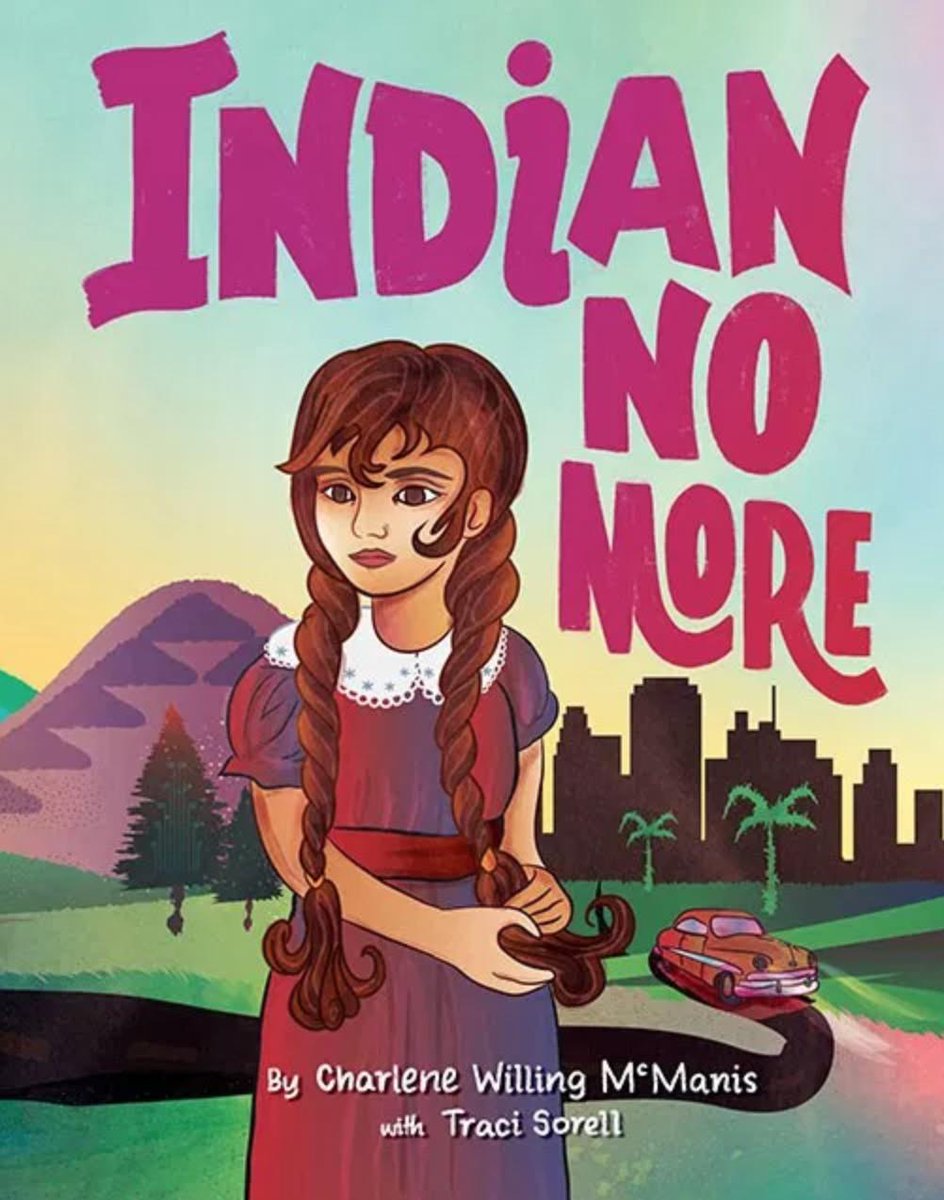
Recommended: INDIAN NO MORE by Charlene Willing McManis with Traci Sorell

Indian No More by Charlene Willing McManis with Traci Sorell, cover art by Marlena Myles, is due out in September of 2019 from Tu Books. Written with middle-grade readers in mind, I highly recommend it for them, but for teens and adults, too.


When I started grad school in the 1990s, I remember reading that children's books can fill the huge gaps in what textbooks offer.

I doubt, for example, that there's a single textbook out there that teaches kids about the termination programs of the 1950s.

Indeed, most non-Native people reading this review of Indian No More probably don't know what the termination program was!

Those who do know what I'm talking about likely didn't learn it in school. They learned about it because their family--like Charlene Willing McManus's--was caught in a government program that determined they were no longer Native.

****

Here's the book description for Indian No More:
Regina Petit's family has always been Umpqua, and living on the Grand Ronde reservation is all ten-year-old Regina has ever known. Her biggest worry is that Sasquatch may actually exist out in the forest. But when the federal government signs a bill into law that says Regina's tribe no longer exists, Regina becomes "Indian no more" overnight--even though she was given a number by the Bureau of Indian Affairs that counted her as Indian, even though she lives with her tribe and practices tribal customs, and even though her ancestors were Indian for countless generations.
With no good jobs available in Oregon, Regina's father signs the family up for the Indian Relocation program and moves them to Los Angeles. Regina finds a whole new world in her neighborhood on 58th Place. She's never met kids of other races, and they've never met a real Indian. For the first time in her life, Regina comes face to face with the viciousness of racism, personally and toward her new friends.
Meanwhile, her father believes that if he works hard, their family will be treated just like white Americans. But it's not that easy. It's 1957 during the Civil Rights Era. The family struggles without their tribal community and land. At least Regina has her grandmother, Chich, and her stories. At least they are all together.
In this moving middle-grade novel drawing upon Umpqua author Charlene Willing McManis's own tribal history, Regina must find out: Who is Regina Petit? Is she Indian? Is she American? And will she and her family ever be okay?

That last paragraph is important. It tells us that the author drew on her own tribal history in writing the story. In the Author's Note, McManis tells us a lot more. She was a baby when the US Congress decided that her tribal nation, the Umpqua, was no longer a Native Nation that would have a government-to-government relationship with the US government. Her family moved to Los Angeles and experienced much of what you read in the story. 


Rather than provide an in-depth review of Indian No More, I'm asking that you go read the review written by Ashleigh, a thirteen-year-old who is part of the @OfGlades teens (on Twitter) that blog at Indigo's Bookshelf. 

Each time they write a review, I tell friends and colleagues to go read what the intended audience thinks about the book. By that, I mean young readers, but it is also vitally important that people know what Native teens think about books written for people their age!

****

I read Indian No More in June and started a Twitter thread on it, on June 28. I'm sharing that thread below.


I've never read a book like INDIAN NO MORE. Written by Charlene Willing McManis, the book cover also has "with Traci Sorell" on it:


It stands apart from anything I've read before because it is about the US government's termination of the Grand Ronde Tribe, and others, too. The US government literally decided that members of these tribes were no longer Indians (hence the bk title). 

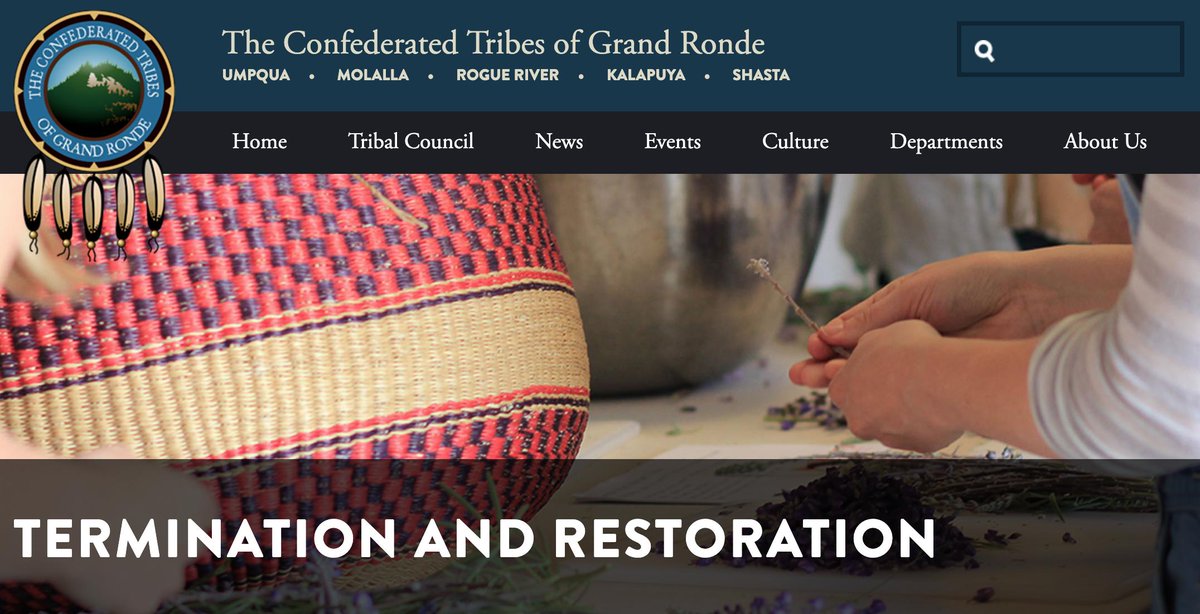
On the Grand Ronde Tribe's website, there's information about what happened. I always tell teachers that a tribal nations website is a primary source.


There are several tribal nations on the Grand Ronde Reservation. In education, we often talk about "best practice." When talking about Native Nations and people, it is best practice to name the specific one being discussed. With Indian No More, best practice means teachers and librarians should specify the tribal nation the story is about: Umpqua. 

As far as I know, Indian No More is the first book for children that is about the life of a child and her family when their tribe was terminated and then, relocated. 

The story in Indian No More is one reason why it is unique. Another is the team that brought it forth. I'm looking at the back matter. The Author's Note from Charlene appears, first, followed by a Co-Author's Note from Traci that tells us why her name is also on the book. 

Charlene got cancer. She asked Traci to revise and polish what she'd written. In her note, Traci talks about being asked to do that. She says she was honored, which is to be expected but she tells us so much more! 

One of the questions she had was how she--a citizen of the Cherokee Nation--could step in to do a book about an entirely different tribal nation. I've never seen anyone's reflections on doing that, before. 

In Traci's words are a deep respect for Charlene, her story, her nation. This is so important! 

I'm flailing as I try to come up with words that capture why Traci's thoughts are so different from the words of white writers who tell us they're writing a story because Native kids/adults they taught asked them to do it. Their words smack of saviorism. 

The respect I read in Traci's words are also in the next item in the back matter: a note from the editor, Elise McMullen-Ciotti.

I'm a fierce advocate for back matter. The words of these three women, plus the photographs in Charlene's note... like I said, I'm flailing for words. 

My review of INDIAN NO MORE will be up soon at American Indians in Children's Literature. Before I go I have one more thing to say. The cover art is by Marlena Myles. She's Native, too. 


Four Native women worked to bring this book--this exquisite story--to readers. I highly recommend it. 

Tuesday, September 24, 2019

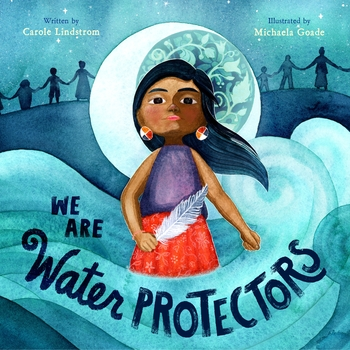
Highly Recommended: WE ARE WATER PROTECTORS by Carole Lindstrom and Michaela Goade

We Are Water Protectors written by Carole Lindstrom and illustrated by Michaela Goade is due out in 2020. 

Today's post is the twitter thread I did yesterday (September 23, 2019) about We Are Water Protectors, an exquisite book by two Indigenous women: Carole Lindstrom is of Anishinaabe/MĂ©tis descent and is tribally enrolled with the Turtle Mountain Band of Ojibwe. Michaela Goade is of Tlingit descent and is tribally enrolled with the Central Council of the Tlingit and Haida Indian Tribes of Alaska. 


****


I love seeing threads about new books by Native writers! @elissawashuta has one going right now. As you see, she's added WE ARE WATER PROTECTORS by @CaroleLindstrom, illustrated by @MichaelaGoade, to her thread.


I saw Carole when I was in DC on Sept 7 at the Indigenous Peoples' Day Curriculum Teach-In, held at the National Museum of the American Indian. She gave me an ARC (advanced reader's edition) of her book. 

WE ARE WATER PROTECTORS is due out March 17, 2010 from Roaring Book Press (Macmillan). I'll have a review of it at American Indians in Children's Literature but for now, I'm over here telling you to pre-order this exquisite book. (us.macmillan.com/books/97812502…) 

We Are Water Protectors

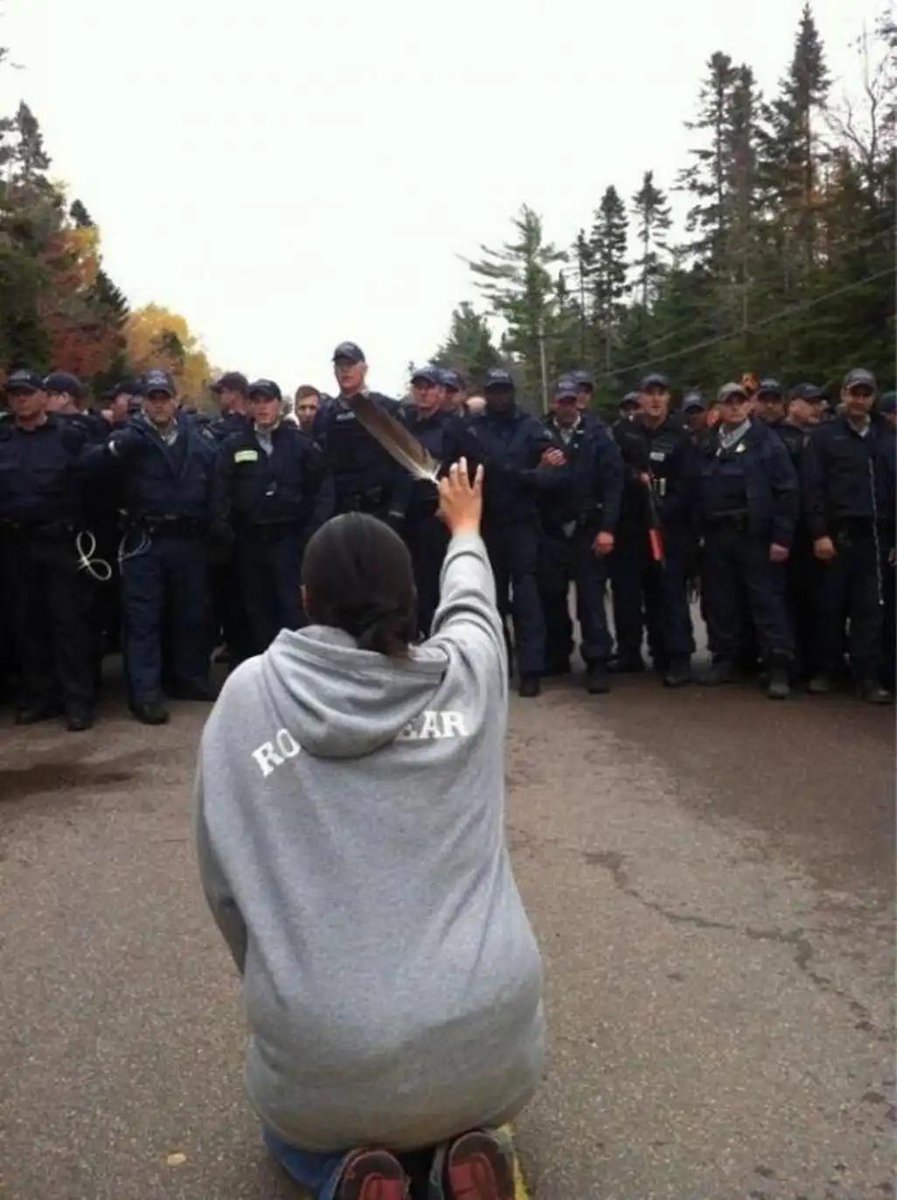
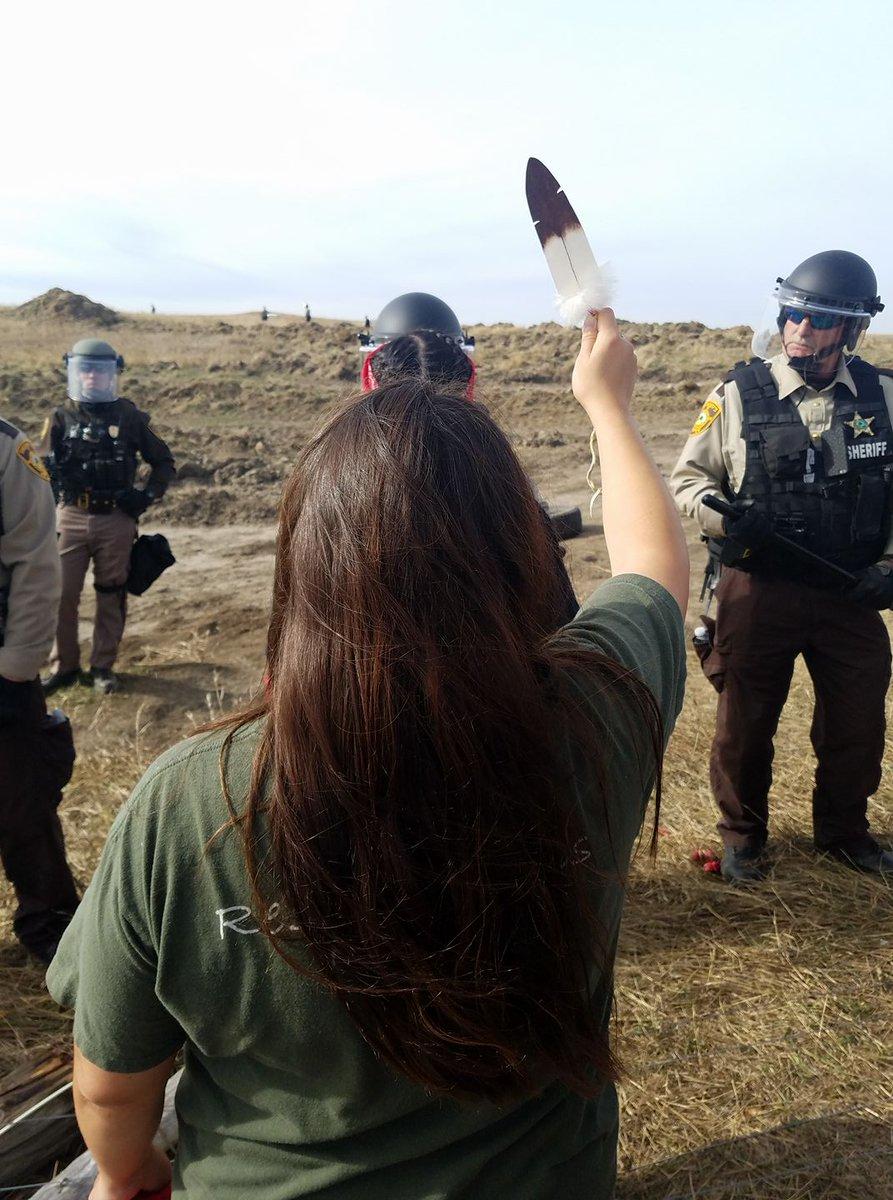
Those of you who follow Native resistance to exploitation may recall an iconic photo taken in 2013 when Royal Canadian Mounted Police raided a camp of Native people who were there to protect their water from drilling. (newsmaven.io/indiancountryt…)


Similar photos were taken at Standing Rock in 2016. Here's one taken by @dallasgoldtooth.


In the photographs of these moments, we see a Native point of view as Water Protectors stand in the face of exploitation.

On the cover of Lindstrom and Goade's book we see the person holding the feather, but behind her... see all the people holding hands? Some are children.


In the photographs we see armed police; in the art we see what those armed police saw: unarmed people--young and old--standing together to protect their water.

Both, the photo and Goade's art... take my breath away.

Friday, September 13, 2019

Update on Personal News on AN INDIGENOUS PEOPLES' HISTORY OF THE UNITED STATES, FOR YOUNG PEOPLE

I don't think that AICL has ever gone six weeks without a post! The last post was on Monday, August 5th and frankly, I was surprised and a bit annoyed that six weeks went by without a new post.

Here's why that happened.

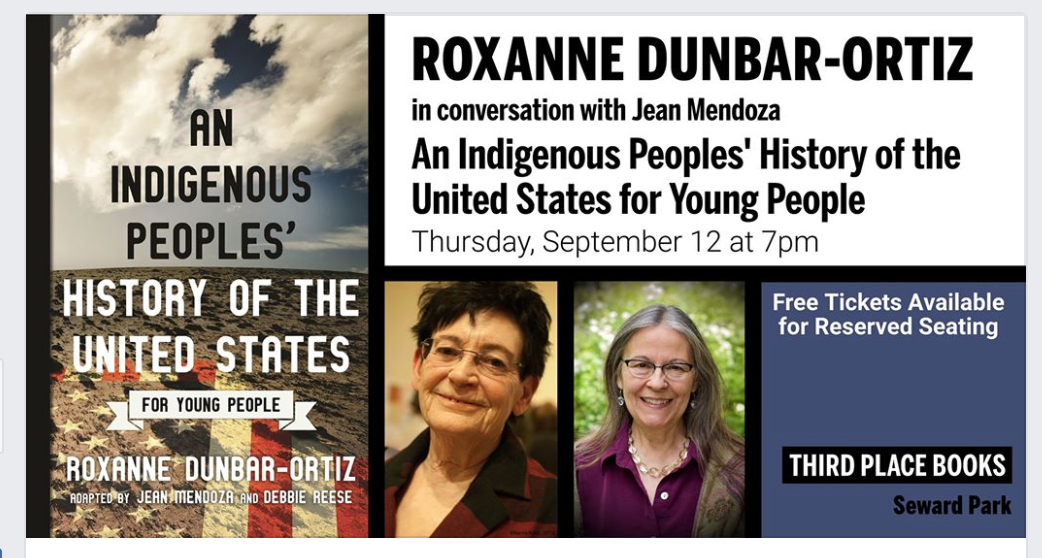
Back on Tuesday, May 28 of 2019 I wrote a post called Personal News: An Indigenous Peoples' History of the United States for Young People. Since then, the book came out and Jean and I have been to several places to talk about it.

On August 9th, I was in California at the Indian Education for All conference hosted by the California Indian Culture and Sovereignty Center. I gave the keynote lecture there and signed books. It was the first book signing I've ever done. Doing that signing at a Native education gathering held on the lands of the Pala Band of Mission Indians made it memorable in a way that nothing else could. One of the people I met who added to it being so memorable is Mary Levi. I was wearing a traditional belt that day. Mary noticed and mentioned it because it is something that pueblo people recognize. As we talked, Mary told me that her mom met me a few years ago. I remember her mom, vividly, because we were talking about books illustrated by one of their family members, Fred Kabotie! Here's me and Mary:


On August 25, Jean and I were together in Chicago at 57th Street Books for the official book launch. The event was memorable for many reasons. Our families were there, we sat together and signed books, and Elisa Gall gifted us cookies with the image of the book cover on them:


On social media, some people thought they were decks of cards. Which, of course, gives us ideas on what a deck of cards about the book might include!

Previous to the launch day, Jean and I had been talking about the need to create a companion website for the book. A day after the launch, I pulled it together (using blogger). The first blog post is a photo essay of the launch.

The following week, we were at the Urbana Free Library in Urbana, Illinois. Then I was in Washington DC where I did the keynote for a Teach-In at the National Museum of the American Indian. From there I went to the University of Colorado, Colorado Springs where I met with librarians about collection development and gave two talks to students in teacher education courses. Meanwhile, Jean was at Third Place Books last night, and has another event coming up near there, next week.


So... we've been busy! That's why there's been six weeks... SIX WEEKS!... with no posts to AICL. But we are definitely reading and drafting posts about old and new books, because that's what we do. Read, think, write.

Oh! Before I hit "publish" on this post, I will add that An Indigenous Peoples' History of the United States for Young People is selling quite well! It is in its 7th printing. I think about 15,000 copies have been sold. Several times, we've gotten emails from people who said they can't get a copy because it is sold out at their store or on back order with an online bookstore. In my last email from Beacon (the publisher), I learned that more books are now available. I hope you'll buy one for our home, school, or university library! Here's a photo of the 7th printing (the lowest number in that string of numbers in a book tells you what printing the copy you're holding is part of).

No photo description available.


I hope you'll buy one for our home, school, or university library!

Monday, August 05, 2019

Debbie--have you seen Kathleen Arden's SMALL SPACES?


A reader wrote to ask if I've read Kathleen Arden's middle grade book, Small Spaces. It came out on July 9, 2019, as a reprint from Puffin Books. It first came out in 2018 from G. P. Putnam's Sons (an imprint of Penguin Random House).

Here's the description:
After suffering a tragic loss, eleven-year-old Ollie who only finds solace in books discovers a chilling ghost story about a girl named Beth, the two brothers who loved her, and a peculiar deal made with "the smiling man"--a sinister specter who grants your most tightly held wish, but only for the ultimate price.

Captivated by the tale, Ollie begins to wonder if the smiling man might be real when she stumbles upon the graves of the very people she's been reading about on a school trip to a nearby farm. Then, later, when her school bus breaks down on the ride home, the strange bus driver tells Ollie and her classmates: "Best get moving. At nightfall they'll come for the rest of you." Nightfall is, indeed, fast descending when Ollie's previously broken digital wristwatch begins a startling countdown and delivers a terrifying message: RUN.


Only Ollie and two of her classmates heed these warnings. As the trio head out into the woods--bordered by a field of scarecrows that seem to be watching them--the bus driver has just one final piece of advice for Ollie and her friends: "Avoid large places. Keep to small."

And with that, a deliciously creepy and hair-raising adventure begins.

The passage that prompted Sam's (they're the person who wrote to ask me about the book) question is on page 83 when Seth says to Ollie:
"Come on, kid," said Seth. "There's always a ghost story. Look around. How long have people lived on this land? There's us, yeah, but before us, there were those people in that graveyard back there. Fanny Collar--you saw her, right?--on her grave it says that she married the first white child born in Evansburg--why do you think that was even a thing? Because before them, there were the Abenaki, and they had this land and farmed it and died on it and wrote their own ghost stories while people died of plague in the streets of London." 
I'm intrigued by that passage and will order a copy of Small Spaces. 

Saturday, August 03, 2019

Debbie--have you seen SANTA CALLS by William Joyce?

A reader wrote to ask if I've read Santa Calls by William Joyce. I looked it up and here's what I found.

It was first published in 1993 by Harper Collins. In the years since then, Scholastic published it, it was made into a board book, and a Braille edition was published, too. Then in 2017, it was published again by Atheneum Books for Young Readers. There are videos of Joyce talking about this edition. I think his art is fine but the Native content of the story... not fine.

Using Amazon's look inside feature, I see that the main character is an orphan boy named Art Atchinson Aimesworth who lives with an aunt and uncle who run a Wild West Show. Art has a sister named Esther and his best friend is "Spaulding Littlefeets, a young Comanche brave." Here they are:


Let's talk about that illustration and the information we are given. It is good that Spaulding is dressed much like Art. He's wearing braids, which is fine but they are thin as can be. That's odd. What is not good? Spaulding's last name, "Littlefeets," is a mockery of Native naming. And, using "brave" instead of "boy" marks Spaulding as different. Most dictionaries state the the word "brave" is outdated or offensive. It would have been great if--for the 2017 edition--Joyce (the author/illustrator) had replaced brave with boy.

Also not great? Spaulding is wearing a headband. That's odd, too. Here's a look at that, from the next page:


The story is set in 1908, in Abilene Texas. Art receives a box from Santa Claus. Inside is a flying machine that Art, Spaulding, and Art's sister, Esther, put together. The basket they're supposed to ride in is broken, so they use Spaulding's canoe instead. Why did a Comanche have a canoe? Comanches are a Plains nation. I suppose he might have had a canoe, but a horse would have been more accurate. The kids could have figured out something to use instead of a canoe.

That's all I can see online. If I get a copy, I'll be back!