Tuesday, July 24, 2012

"Books that Shaped America" at the Library of Congress

Recently, I began to see links to a new exhibit at the Library of Congress. Titled "Books That Shaped America," it consists of 91 books.

When I learned of the list, I wondered who selected them and if those individuals had an inclusive view of the peoples of America. I've since learned that the list was developed by "curators and experts from throughout the Library of Congress."

There are some great items on that list, but, there isn't a single title on the "Books that Shaped America" by an American Indian, which makes me wonder about the curators and experts who selected the books. Is there not an American Indian amongst them? Or, perhaps, an expert in American Indian writings?

That list of books should include Vine Deloria Jr.'s bestseller, Custer Died For Your Sins: An Indian Manifesto. It led a great many people to think critically about the U.S. government and American Indians. Deloria's ideas shaped a lot of thinkers who were and influential in government policies that shaped and continue to shape America. Custer Died For Your Sins was (and is) very influential in other places, too. It shaped the ways that many American Indian Studies programs at universities are structured, and, it changed the shape of the ways that anthropology departments study American Indians. Deloria's work is so influential that symposiums are named after him.

The overview to the list of Books that Shaped America includes a link to submit a title you think ought to be on a future list. I invite you to use the link, and pick up a copy of the book, too, at your local library or bookstore. If it isn't there, request it. 

Tuesday, July 10, 2012

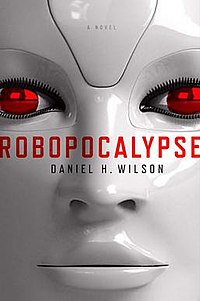
Robopocalypse is summer reading in Champaign, Illinois

I was at the Champaign Public Library a few weeks ago and saw that the local public school has Daniel H. Wilson's Robopocalypse on its list of summer reading. What a treat for local high school students who select it!

Wilson is Cherokee (enrolled) and has a new book due out, by the way, titled Amped. Kathy Ceceri of Wired said "Wilson has a voice and style very much like Stephen King. But unlike King, Wilson also had the chops to base weird things in his stories on science." I liked Robopocalypse and look forward to Amped.


Thursday, July 05, 2012

Recent radio program on the shut-down of TUSD's Mexican American Studies Classes


On July 2nd, Education Radio featured a two-hour program in which they interviewed students and teachers from the now-shut-down Mexican American Studies program in Tucson Unified School District. Here's the link:

Arizona Goddam! Fight for Raza Studies

And here's info about the radio program (pasted from the Education Radio website):


In January 2012, Tucson Unified School District's (TUSD) renowned and highly successful Raza Studies Program, program was shut down. The program was finally eliminated after a prolonged, brutal campaign to demonize the students, the teachers and Tucson Arizona’s Mexican American community;  the latest of a long history of cultural genocide enacted against Mexican Americans and indigenous people in the United States. In this two hour program, we look at the history of the struggle for Raza studies, also known as Mexican American Studies, in the Tucson Unified School District and why the program was so meaningful and successful, and we explore why the program was viciously attacked and shut down - by examining the racist narrative and intent of the state and school administrators who are responsible for its destruction. We hear about the devastating impact the shutting down of this program has had on teachers, students and community members in Tucson. 
 
 
Crystal Terriquez and Pricila Rodriguez

There are so many incredibly dedicated people involved in the fight for Raza Studies in Tucson - from those who helped to found and build the program, the many teachers who taught in the program, the students who participated, and the community members and activists who are fighting to reinstate it. We were able to speak to just a few of these many voices, and want to recognize the hard work and varying perspectives of all those with whom we did not speak. 


Jose Gonzalez

We talk with four students who are alumni of the program, who share their experiences: Crystal Terriquez, Pricila Rodriguez, Alfred Chavez and Alfonzo Chavez. We also share testimony from a student, Teresa Mejia, who was present when TUSD adminstrators removed books and materials during classes (this testimony is available on activist Brenda Norrell’s blog: http://bsnorrell.blogspot.com/). We spoke with Mexican American Studies history teacher Jose Gonzalez about the history and the shutting down of the program. 


Raquel Rubio-Goldsmith
Human rights activist and University of Arizona professor Raquel Rubio Goldsmith helps us understand the link between what is happening in Tucson today and the Chicano movement of the 1960s. We also speak with University of Illinois Chicago Professor of African American History and Educational Policy Studies David Stovall, who conducted a program evaluation of Ethnic Studies programs in Tucson over the 2006-2007 school year, and hear about his findings from that evaluation.


We talk to social theorist Joe Feagin, about the way that racism and white supremacy are playing out in this situation. Banned author and poet Martin Espada reflects on the dangers of censorship, how it feels to have his work banned, and shares a poem that speaks to the power that literature can have when used a tool for resistance and emancipation. Finally, we discover the growing local and national resistance movement that gives hope, not only for the future of this program in Tucson, but to the building of solidarity that will help fight this from happening elsewhere. Alfred and Alfonzo Chavez, members of U.N.I.D.O.S., talk with us about Tucson's Freedom Summer, we speak with Tara Mack, Director of the Education for Liberation Network and member of the Teacher Activist Groups, about the No History is Illegal Campaign, and we hear a clip of Tony Diaz talking about Librotraficante.

Specific examples of this resistance and opportunities to get involved in the fight are listed below:
 
Save Ethnic Studies   - a website produced by the teachers involved in the struggle. Visit this site to gain a deeper understanding of the issues.
 
Support the Raza Defense Fund to donate to help two MAS teachers in their lawsuit against incredibly well-funded and vicious opposition.
 
No History is Illegal - a website produced by Teacher Activist Groups where you can find curriculum based on the banned MAS curriculum to use in your own classroom. 
 
Librotraficante - a project devoted to fighting back against the censorship and banning of books in Arizona.  
 
Tucson Freedom Summer  - join the fight to save MAS  - in Tucson - July 2012


Additional Resources
 
 
Tucson’s Maiz-Based Curriculum: MAS-TUSD Profundo by Roberto Dr. Cintli RodrĂ­guez 
 
 
The Cambium Audit Report and other related materials
And yet there is more...
 
Due to time constrants there were several pieces we were unable able to fully explore in our radio show. We have tried to include some of those pieces below in hopes that you will be able to deepen your understanding of the struggle in Tuscon. The following quotes are by several of the authors whose books were boxed up and taken out of classrooms as a part of the ban on ethnic studies:

"I don't take it personally, but what I do see is an ongoing plan, a very deliberate plan and antagonism in the US and Southwest. What is obvious is that it's about more than books. ... When they take out Shakespeare, Paulo Freire or Pulitzer Prize winners, that I can't imagine that they read everything and somehow determined this is a threat to democracy. ... This reminded me of McCarthyism and the red-baiting of writers, except now we are targeting a specific people. I feel we have to start paying attention to this trend. Now we are seeing similar laws (to SB 1070) in Georgia and Alabama. I don't think most of the public east of the Mississippi or the East Coast is aware. We have to make them aware" - Ana Castillo, author of the banned books Loverboys and So Far From God

"The last time a book of mine was outlawed was during the state of emergency in apartheid South Africa in 1986, when the regime there banned the curriculum I’d written, Strangers in Their Own Country, likely because it included excerpts from a speech by then-imprisoned Nelson Mandela. Confronting massive opposition at home and abroad, the white minority government feared for its life in 1986. It’s worth asking what the school authorities in Arizona fear today."- Bill Bigelow, editor of Rethinking Schools and author of the banned book Rethinking Columbus

Let's get one thing out of the way: Mexican immigration is an oxymoron. Mexicans are indigenous. So, in a strange way, I'm pleased that the racist folks of Arizona have officially declared, in banning me alongside Urrea, Baca, and Castillo, that their anti-immigration laws are also anti-Indian. I'm also strangely pleased that the folks of Arizona have officially announced their fear of an educated underclass. You give those brown kids some books about brown folks and what happens? Those brown kids change the world. In the effort to vanish our books, Arizona has actually given them enormous power. Arizona has made our books sacred documents now.” - Sherman Alexie, author of the banned books Ten Little Indians and The Lone Ranger and Tonto Fist Fight in Heaven

Monday, June 25, 2012

"God used the 'Trail of Tears' to bring many Indians to Christ"

In August of 2010, a woman I met while on vacation asked me if I knew about the A Beka books. I didn't, and hadn't given them another thought until today, when I saw the multiple references on Twitter to the Sociological Images website and their excerpts from the A Beka books. Here's a screen shot from the video:


Watch the entire video. Interesting excerpts, interesting teaching, funded by your tax dollars. 

Sunday, June 24, 2012

Patricia and Fredrick McKissack Jr.'s BEST SHOT IN THE WEST: THE ADVENTURES OF NAT LOVE

A few days ago, Doret (she blogs at The Happy Nappy Bookseller) posted her review of Patricia and Fredrick McKissack Jr.'s Best Shot in the West: The Adventures of Nat Love. The book is a graphic novel. Here's the summary (in the catalog of the local public library):
From acclaimed authors Patricia C. McKissack and Fredrick L. McKissack Jr. comes a thrilling biography of an unforgettable man told in compelling graphic novel form. Born into slavery in 1854, Nat Love, also known as "Deadwood Dick," grew up to become the most famous African-American cowboy in the Old West. A contemporary and acquaintance of Bat Masterson and Billy the Kid, Nat was widely known as an expert roper and driver, a crack shot, and a real Wild West character. Featuring lively full-color artwork by Randy DuBurke, Best Shot in the West is an exhilarating mix of high-interest historical fiction and nonstop adventure.
On page 60 (the book is 130 pages in length), Nat has left his family home and is working with a cattle team in Kansas. It is 1869, and Nat is 15. They're riding out west when the leader of the team calls out "Indians!" They are attacked by "a raiding party of Old Victorios, a renegade group of Apaches" who had been "harassing folks for months." These Apaches are on horseback and have guns. One is wearing a feathered headdress and another is wearing a headband with a feather in the back. Love specifies Apaches, but I don't know who the "Old Victorios" or the "Victorios" were. There was an Apache man named Victorio who led a group of Apaches in the 1870s. They refused to give up their homelands. Maybe that is who Love was thinking about, but I am not sure Victorio was in Kansas. From what I've read, Victorio was primarily in Texas, Arizona, New Mexico, and Mexico. 

On page 84, the text reads:
Between Indians and White desperados, life in cattle country was dangerous. We got into fierce fights and long chases. Some got hurt. Some died.
That sentence is a perfect example of the way in which language shows bias. According to that sentence, there were Indians, and there were White desperados. A desperado, according to the Merriam-Webster dictionary, was a bold or violent criminal, especially "a bandit of the the Western United States in the 19th century." I think we all know that not all Indians were bold or violent criminals. Wouldn't that sentence be better written as "Between the desperados--Indian ones and White ones--life in cattle country was dangerous." That simple difference packs a lot of information! Can you imagine a teacher pointing out that passage to a student? How it exponentially increases the ways in which the student might begin to imagine American Indians?

On page 102, Nat is in Arizona looking for stray cattle. He is attacked by Indians on horseback. They use guns and tomahawks, and are part of "Yellow Dog's tribe." Nat uses up all his bullets and then tries to "fistfight my way out of that canyon."

The only "Yellow Dog" I'm able to find is on a webpage about Black Indians of Texas. Yellow Dog, the web page says, "was said to have more Black Indians than full blood Indians in his band of Comanches." On page 110 of Best Shot in the West, Yellow Dog's spokesman tells Nat that "Many of us share the same blood as you. The blood of slaves. Yellow Dog wants you to be part of this tribe." He then offers Nat "one hundred ponies and my daughter for marriage." I've got to spend time researching that trope... I've seen it in other places---like Westerns.

On page 116 is Nat's last mention of Indians. He is in Old Fort Dodge, Kansas, and thinks he ought to steal a cannon to help them fight off rustlers and Indians. That passage is like the "Indians and White desperados" on page 84. Could Indians be rustlers? Or were Indians just Indians?!

The author's note says that they relied on Love's autobiography for the material they used to write Best Shot in the West. I wish they'd used it more selectively, or, that they'd figured out how, in their narrative, to put some context around Love's words about Indians. Why were the Apache men attacking settlers? Were those settlers on land that didn't belong to them? What had the settlers done to the Apaches? As-is, the take-away about Indians is that they were all just bad.

An interesting exception to the all-bad Indian is Yellow Dog and the Black Indians. As-is, the story suggests that if Indians are mixed with someone else, Indians could be good guys. Nat may have thought that was true, but surely the talented McKissack's could figure out a way to frame Nat's views so that today's readers gain the information necessary to put all of it into context.

My take-away? The all-bad Indians ruin the story. I can't recommend Best Shot in the West. 

 I'd like to see stories for children about Black Indians. If you know of one, let me know. (Medearis's Dancing with the Indians is full of problems. See my review: Angela Shelf Medearis's Dancing with the Indians.)

Friday, June 22, 2012

Jodi Lynn Anderson's TIGER LILY

I'm reading reviews on goodreads of Jodi Lynn Anderson's new book, Tiger Lily. 

In which there's a shaman named Tik Tok who also happens to be Tiger Lily's adoptive father, and, a guy the same age as Tiger Lily... His name is Pine Sap.


According to reviewers, Tiger Lily is shunned because her tribe thinks she is cursed. They also shun Pine Sap because he's very small (physically) and to them, that's not ok...

The first lines in the publisher's promo for the book:


"Before Peter Pan belonged to Wendy, he belonged to the girl with the crow feather in her hair. . ."

Crow feather in her hair?

Reading some of it at the HarperCollins site, I see that Tiger Lily is of the "Sky Eaters" tribe. She stands out because she's like a cross between a roving panther and a girl. She stalks instead of walks. And, because she's female, she's out in a field when the story opens, cultivating tubers, because that is a woman's job.

I don't have an ARC. If someone wants to send me theirs, send me an email and I'll send the mailing address. The book is due out on July 3rd.


Thursday, June 21, 2012

"Ethnic Studies Under Fire: The Role of Publishers, Librarians, Teachers, and Activists"

On Monday, June 25, 2012, from 1:30 to 3:30 at the American Library Association conference in Anaheim, Adriana McCleer, Carmen Tafolla, Oralia Garza de Cortes, and Tony Diaz will present "Ethnic Studies Under Fire: The Role of Publishers, Librarians, Teachers, and Activists." Sponsors include REFORMA and ALA's Intellectual Freedom Committee.

The description for their panel:

The removal of educational materials in connection with the elimination of Mexican American Studies classes in the Tucson (AZ) Unified School District sparked a national outcry and resolutions in opposition from the American Library Association, REFORMA, the American Indian Library Association, and others. At this panel, hear from represntatives from the publishing, library, teaching, and activist communities as they discuss the genesis and implications of this controversial decision. This program is sponsored by IFC/AAP/REFORMA.

Location: Anaheim Convention Center, 201D


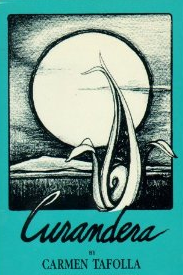
Carmen Tafolla's books are amongst those that could no longer be taught by teachers who used to teach in the Mexican American Studies department that was shut down in the Tucson Unified School District (for background, see the list of chronological links under the "Mexican American Studies" button on the tool bar above). In March, San Antonio, TX named her as the cities first poet laureate, and the publisher of Curandera reissued the book in a 30th anniversary edition.


Oralia Garza de Cortes was amongst the librarians who worked on developing the ALA resolution condemning the actions taken by administrators in TUSD. This photo was taken at ALA Midwinter, where the resolution was drafted and passed:


Tony Diaz launched Librotraficante, a project through which book lovers collected copies of the banned books and delivered them to students in Tucson Unified School District. Here's a video of Diaz on Democracy Now:


I can't be at ALA, but look forward to the hashtag tweets from audience members who attend the panel. The hashtag to follow on Twitter is #alaif.