Thursday, March 08, 2012

REFORMA Resolution in Support of the Students of the Outlawed Mexican American Studies Program in the Tucson Unified School District


[Editor's Note: Are you looking for information about the shut-down of the Mexican American Studies classes at Tucson Unified School District? A chronological list of links to AICL's coverage of the shut-down is here.]
_________________________________


February 29, 2012
REFORMA RESOLUTION IN SUPPORT OF THE STUDENTS OF THE OUTLAWED MEXICAN AMERICAN STUDIES PROGRAM IN THE TUCSON UNIFIED SCHOOL DISTRICT

REFORMA, the National Association to Promote Library and Information Services to Latinos and the Spanish-speaking, an affiliate of the American Library Association, with nineteen local and regional chapters and at-large members from all parts of the United States, views the dismantling of the Tucson Unified School District (TUSD) Mexican American Studies (MAS) program as a violation of the core principles of intellectual freedom and equity of access, and a violation of the Library Bill of Rights.1

REFORMA advocates for and affirms students’ right to have access to accurate and meaningful information that will enhance their critical inquiry skills and understanding of an inclusionary society that honors and respects all of its component members. We support student access to diverse literature that lends to inquiry, conversation, and critical thinking – all strengths that we value in the continued building of our democracy.

WHEREAS the 2010 Census found that Arizona’s Hispanic/Latino population accounted for 29.6% of the state’s total population,2 and Tucson’s Hispanic/Latino population accounted for 41.6% of the city’s total population3, with both the state and the city having larger Hispanic/Latino populations than the national average; and

WHEREAS Dr. Arnulfo Trejo, educated in TUSD schools and the University of Arizona and later serving on the faculty of the University of Arizona’s Graduate Library School, in 1971 founded REFORMA and provided its driving force; and  
WHEREAS reading list titles associated with the MAS program consist of works written by nationally and internationally renowned, award-winning authors, including but not limited to Sherman Alexie, James Baldwin, Ana Castillo, Sandra Cisneros, Francisco Jimenez, Matt de la Peña, Carmen Tafolla, and Luis Alberto Urrea, whose stories reflect this country’s rich and diverse heritage; and

WHEREAS these books have been removed from classrooms related to the MAS program, and the TUSD school libraries do not contain all of the removed titles, making this literature inaccessible to all TUSD students;4 and
WHEREAS REFORMA views teachers as brothers and sisters in the same mission of fostering the love of reading and education by promoting books, literacy, and critical thinking; and
WHEREAS REFORMA is outraged by the confiscation and removal of these materials from classrooms and asserts that their lack of availability in all school libraries creates de facto censorship;
NOW THEREFORE BE IT RESOLVED that REFORMA, the National Association to Promote Library and Information Services to Latinos and the Spanish-speaking:
  1. Condemns the dismantling of the MAS program at TUSD and the removal of textbooks from the classrooms;
  2. Affirms that exclusion of and/or restriction of access to the multiple viewpoints, experiences, and histories expressed in books fosters antagonism, isolation, and withdrawal from a pluralistic and inclusive society,
  3. Encourages all REFORMA members and member libraries to take local action by creating book displays of the confiscated materials, creating educational programs about the value and meaning of intellectual freedom and censorship, and creating resources in support of the students of the MAS program to further their pursuit of learning; and
  4. Commits to developing resource tools and action kits in support of the MAS students’ right to pursue their intellectual, informational, and recreational needs; and be it further
RESOLVED that REFORMA (The National Association to Promote Library and Information Services to Latinos and the Spanish-speaking):
  1. Unanimously supports the excellent service delivery and specific actions taken by our REFORMA-Tucson Chapter, such as the planning of a 2012 Latino Literacy Roundtable, and their compilation and dissemination of the Outlawed and Threatened Book List entitled “THE CHILLING EFFECTS: A Mexican-American Studies Challenged and Outlawed Reading List;” 
  2. Unanimously affirms the January 2012 American Library Association, Office of Intellectual Freedom Resolution OPPOSING RESTRICTION OF ACCESS TO MATERIALS AND OPEN INQUIRY IN ARIZONA ETHNIC AND CULTURAL STUDIES PROGRAM,5 the January 2012 American Indian Library Association STATEMENT ON ETHNIC STUDIES PROGRAMS IN ARIZONA,6 and the January 20012 Progressive Librarians Guild STATEMENT ON CENSORSHIP AND THE TUCSON UNIFIED SCHOOL DISTRICT; 7  and
  3. Unanimously applauds the TUSD students who protested the dismantling of the MAS program and affirmed the changes the MAS program made in their lives, and the teachers and parents who spoke out against the program’s dissolution: MAS Students Speak Out About Their Classes and Books Being Banned in Tucson http://youtu.be/-OUSbELFpX8 and TUSD-MAS Historical Trauma and Sadness http://youtu.be/k4g4Mv3RpUo
________________________
1American Library Association. Library Bill of Rights. Accessed from http://www.ala.org/advocacy/intfreedom/librarybill on February 11, 2012.
2United States Census Bureau, 2010 Census Interactive Population Search: Arizona. Accessed from  http://2010.census.gov/2010census/popmap/ipmtext.php?fl=04 on February 11, 2012.
3United States Census Bureau, State and County Quick Facts: Arizona, January 17, 2012. Accessed from http://quickfacts.census.gov/qfd/states/04000.html on February 11, 2012.
4Alexis Huicochea, “TUSD Rejects Reports of Book Ban,” Arizona Daily Star, January 18, 2012. Accessed from http://azstarnet.com/news/local/education/precollegiate/tusd-rejects-reports-of-book-ban/article_d2790b34-9618-5eed-80f2-80628edc88f4.html on February 12, 2012.
5OIF Blog, “Resolution Opposing Restriction of Access to Materials and Open Inquiry in Ethnic and Cultural Studies Programs in Arizona,” January 24, 2012. Accessed from http://www.oif.ala.org/oif/?p=3157 on February 12, 2012.
6American Indian Library Association, Statement on Ethnic Studies Programs in Arizona, February 2, 2012. Accessed from http://www.ailanet.org/other/AILA_AZ_StatementCORRECTED.pdf on February 12, 2012.
7Progressive Librarians Guild, PLG Statement on Censorship and the Tucson Unified School District, January 21, 2012. Accessed from http://libr.org/plg/tusd.php on February 12, 2012.

Wednesday, March 07, 2012

Matt De La Pena featured at a Save Ethnic Studies fundraiser

If you're in Tucson next Tuesday (March 13, 2012), head over to the fundraiser for Save Ethnic Studies. Matt De La Pena is the featured guest. Matt's book, Mexican WhiteBoy is amongst those that former Mexican American Studies teachers can no longer teach "from a Mexican American Studies perspective."

Tuesday, March 06, 2012

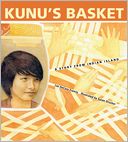
New book: KUNU'S BASKET: A STORY FROM INDIAN ISLAND, by Lee DeCora Francis

Put Kunu's Basket: A Story from Indian Island on your to-be-ordered list. Written by Lee DeCora Francis (she's Penobscot and HoChunk), it is a beautifully written and illustrated picture book about a young Penobscot boy named Kunu who is learning how to make the baskets that the men in his tribal nation have made for generations. A huge plus is that book is set in the present day.

The story opens with Kunu sitting at the table in his house, working with ash strips that he is trying to weave into a basket. Frustrated, he takes the ash strips with him outside and sits on a log. Muhmum (his grandfather) is sitting on his porch next door and goes over to Kunu.

Over the next pages, Muhmum helps Kunu make his basket. In that process, Kunu learns a bit of family and tribal history, and he learns about patience, too.

Susan Drucker's illustrations of Kunu, his family, their house, and the Maine landscape are a terrific compliment to the story. At her website, she's posted many of the illustrations.

I hope Lee DeDora Francis writes more books. She's got a knack for seamlessly presenting the story and the tribal information necessary without sounding didactic. She lets the narrative do some of that work for her. Some writers put the words into the mouth of the character and that doesn't work. It yanks the reader (me) out of the story. Here's an example. This is the conversation and text that follows the moment when Muhmum goes to Kunu, sitting on the log, frustrated:

"What's wrong, Grandson? Why the sad face?"

"Well, I just want to make baskets like you and my dad. I keep trying, but I can't do it."

Muhmum smiled. All the men in the family made baskets. It was something that they were known for on the island. He was glad to see Kunu with the ash strips in his hands.

See? You and I learn something that Kunu and Muhmum know. If the author had inserted that information into words spoken by Muhmum, it wouldn't work. Later, that information is in Muhmum's words, but the context is right for it. A step in the basket-making process is for Kunu to make a rim. It is hard to do, and Muhmum offers to help Kunu with that step:

Kunu thought for a few moments. He pointed to the pack basket in the corner and asked, "Did anyone help you with the rim on your basket?"

"Yes, my grandfather," replied Muhmum.

Kunu kept listening.

"Basket making is something that the sons in our family have learned from our fathers and grandfathers going back a long, long way. My grandfather taught me how to do the rim just as I'll show you."

See what I mean? This is exquisite writing, and I'd love to see more of it. Thanks, Lee DeCora Francis, Susan Drucker, and Tilbury House


Pueblo Stories--in Tewa--Digitized at the University of New Mexico

When I was a kid growing up on our reservation in the 1960s, I'd sometimes go to the tribal office complex where "Mr. Speirs" was holding a language class. I'm currently doing some research on him, but for now, I want to point you to the materials developed in some of those classes. The materials are stories that have been digitized at the University of New Mexico. They are viewable online.


Illustration in Pehtisye Ay
Pehtsiye Ay - Three Stories in Tewa. (1969), Summer Institute of Linguistics, Santa Ana, California. The three stories are:
  • Pho Ts'ay Povi-adi In Poeyeh - Goldilocks and the Three Bears, in the Tewa dialect used at Ohkay Owengeh (San Juan Pueblo)
  • To P'f Povi - Little Red Riding Hood, in the Tewa dialect used at Santa Clara Pueblo
  • In Pojeh Pehtsude ay - The Three Little Pigs, in the Tewa dialect used at Santa Clara Pueblo.  
The illustration from Pehtsiye Ay is terrific! See the ceiling beams and the deeply inset window? That is what our adobe homes look like. The elk on the wall and the rug on the floor reflect the decor of our homes, and baby bear's clothing and the rocking chair reflect some of the non-Pueblo things we incorporate into our lives. 


The second Pueblo item in the collection is T'owa Vi Hae Panyu I, written by Teresa V. Gutierrez, illustrated by Eloy Suazo. The book is not dated. It was published through the Title VII Project at Santa Clara Pueblo.


The digitized collection includes (as of this writing) 80 different items. The majority are Navajo stories and readers. Here's the title page of Ch'at which is a basal reader in the Dine (Navajo) language developed in cooperation with Rock Point Community School in Chinle, Arizona:


A special thanks here, to Paulita Aguilar at UNM, for sending the link about this collection. She is the curator for the Indigenous Nations Library Program at UNM.

Thursday, March 01, 2012

CRADLE ME by Debbie Slier

It is impossible for me not to have positive feelings when I look at the faces of babies. Debby Slier's Cradle Me had me happily gazing at the faces of babies from eleven different tribal nations in their cradle boards. Here's the cover:


Inside are babies in their cradleboards, smiling, frowning, peeking, touching, crying, yawning, thinking, looking, sleepy, and sleeping. Beneath each of those words is a line for a parent/librarian/teacher to write that word in--perhaps--the Native language of the child the book is being used with.  It is a powerful book because the images are photos, not drawings, and because Slier included a two-page spread that specifies each baby's tribal nation.

When you use the book, make sure you use present tense verbs! I recommend it and think you'll enjoy it, too. (Note, 3/2/2012: Cradle Me is published by Star Bright Books.)

Note: March 6, 9:30 AM CST
I spoke with the publisher a few minutes ago. If you work with a literacy organization and wish to purchase 60 or more copies of the book, the publisher will give you a 60% discount off the retail price.

UPDATE: April 23rd, 2012, 7:45 AM CST
If you came here from Betsy Bird's post about board books and you're interested in additional books like Cradle Me, see my list of Top Board Books.

Friday, February 24, 2012

February 23rd Update from Curtis Acosta, former Mexican American Studies Teacher, Tucson Unified School District

[Note: A chronological list of links to AICL's coverage of the shut-down of the Mexican American Studies Department at Tucson Unified School District is here. Information about the national Mexican American Studies Teach-in is here. The best source for daily updates out of Tucson is blogger David Abie Morales at Three Sonorans.]

___________________________________________________

Photo from "A Teacher Put to the Test"
With his permission, I am posting Curtis Acosta's February 23rd update regarding the experiences of teachers and students who were in the Mexican American Studies courses at the Tucson Unified School District. This is his third letter. Click here to read the first one on January 23rd, and here to read the second one on January 26th. At the bottom is a video of Curtis talking about his courses. And---check out "A Teacher Put to the Test" in The Scene, the alumni magazine published by Willamette University in Oregon where he got his degree. Here's his letter:


Dearest colleagues and supporters,

Forgive the lack of communication as of late, but the new situation that we have been handed since the dismantling of our Mexican American Studies program has been overwhelming. In fact, I am fairly certain the reason why my family and I have been sick so much recently is in direct connection to the stress of this situation.

I want to thank all of you who have pledged your support through the No History is Illegal campaign or the other petitions that have circulated. Your testimonials have been inspiring amidst the chaos in Tucson and our students were thrilled to see so many dots on the globe. It is another act that has helped them feel that people care since our district administration has shown little sensitivity to their pain. They did find the time to visit some of our classes to give a thinly veiled threat that students will be punished if they continued to actively protest during school time. One student leader, Nico Dominguez, was threatened with suspension after a respectful, yet critical, statement to the four members of the school board who voted to eliminate our classes. Fortunately, we were able to advocate for him and make sure that there was some accountability for the administration to follow due process and magically the threats disappeared.

As far as in the classroom, I have been exposed to a word that I have never heard before in any of our Mexican American Studies classes, and that word is "hate." On three different occassions I have heard my students comment that they hate something that we were doing in class. First, it happened as I wheeled in the district adopted textbooks into our room over a month ago. I heard two girls say, "Ewww" and another student say, "I hate reading out of those books." I have never taught out of textbooks in my 16 years of teaching so I was struck by the rawness and veracity of the comment. This happened again yesterday in class when a young woman refused to write an essay citing that she feels dumb when she reads out of the textbook and hates it. Finally, a young man in my senior class was taking a quiz at the end of the first Act of Macbeth and said he hated these types of tests. Of course, these are all district approved instructional materials that I was encouraged to adopt in my classes in order to avoid discipline and possible termination. The students know this, but they still yield visceral reactions that break my heart.

In a similar note, you'll be happy to know that upon the first monitoring session of my class last week, I was found to be in compliance. Of course, when I asked for written criteria or an evaluation instrument that was used to make such an assessment, none was provided and no answer was given. For over a month we have tried to get written expectations and have been ignored. Thus, we now have monitors entering our rooms with an invisible checklist for compliance. This will only get more dangerous for us in the coming weeks since the State is now getting involved. Since my last message, the Arizona Department of Education has informed our district that we will be undergoing unannounced observations for our compliance by specialists. This is without the criteria for our safety being defined, and our district still isn't sure who these specialists will be, nor their qualifications or experience in public education. We were also forced to box up more materials for the state including PowerPoints, texts, and even copies of a vocabulary list I use with my students.

We are in uncharted waters in terms of vagueness and our district remains consistent. Their meager defense of our program during the appeal process is closely related to the open door policy they have given to the state department of education. They have continually played Pontius Pilate in this struggle and we are convinced this will be why justice will prevail. As many of you may know, the Arizona legislature continues to target teachers with outlandish legislation about teacher language and partisan instruction. We have told our colleagues for years that our situation is precursor to the types of government intrusion that could happen to us all. During this spring, I fear we will see such a statement become prophecy.

In the meantime, thank you all for keeping us in your thoughts and actions. Our students and community refuse to embrace this awful reality as permanent and are hopeful that our classes will return.

In Lak Ech,
Curtis Acosta


Thursday, February 23, 2012

TUSD's Mexican American Students Skype in at Yale University for Teach-In

[Note: A chronological list of links to AICL's coverage of the shut-down of the Mexican American Studies Department at Tucson Unified School District is here. Information about the national Mexican American Studies Teach-in is here. The best source for daily updates out of Tucson is blogger David Abie Morales at Three Sonorans.]


___________________________________ 

Last night (February 22, 2012), students from the now-banned Mexican American Studies (MAS) classes at Tucson Unified School District skyped in from Tucson to New Haven, Connecticut, for a Teach-In at Yale University.
 
It was an outstanding event, with a great deal of enthusiasm and support for the MAS students. The MAS students spoke of the need to censor the writing they do in classes because their work can be collected and examined to see if former MAS teachers are violating the ban by continuing to teach from a Mexican American perspective. When asked about ways of providing them with support as they continue to fight the ban of the MAS program, one student referenced a letter they prepared that asks people to send photos of teach-ins and letters to TUSD that demonstrate support for the MAS program. (See the letter below.)

Here's two photos. First is the Tucson students. Beneath it is a photo of the overview I presented at the start of the Teach-In. Both photos were taken by Theodore Van Alst, Assistant Dean of Yale College and Director of the Native American Cultural Center.


Panel members were:
  • Alicia Schmidt Camacho, Associate Professor of American Studies and Ethnicity, Race & Migration
  • Stephen Pitti, Professor of History & American Studies, Director of Ethnicity, Race & Migration
  • Birgit Brander Rasmussen, Assistant Professor, American Studies
  • Debbie Reese, American Indians in Children's Literature

Conversations will continue between Yale professors and students, and the MAS students in Tucson.

_______________

To Supportive Educators and Supporters Who Have Access to Students:

UNIDOS is calling upon YOU to help us launch our first NATIONAL YOUTH SOLIDARITY MOVEMENT for the youth and community here in Tucson fighting to preserve Mexican American Studies and stand up for human rights in our society as a whole! This is a moment we can all contribute to in a way that will not only educate youth and students across the country about the injustices going on right here in Tucson, but it will allow for students everywhere to show love and be a part of this movement that belongs to everyone!

UNIDOS has been organizing in Tucson since January of 2011 and hope to continue spreading the message that YOUTH CAN RISE UP! For the latest on the struggle from Tucson, check out our latest media coverage through Real News, and a simple Google News search of "Ethnic Studies in Tucson" will flood in plenty of recent updates and ways to understand the issue.

Attached is a letter calling for National Youth Solidarity, how we hope to gain support and an information political analysis sheet written by UNIDOS to help spark political discussions and spread information directly from youth fighting in the battle in Tucson. Our contact information is provided on the letter and we hope that you can help us forward this first wave of national solidarity to educators and students EVERYWHERE!

If you would like to have educators/students contact us directly, please forward this email and we will be more than willing to introduce ourselves and our intentions to send love to the students still fighting on the front lines. We would love to add more educators' names to our list to outreach to, so please don't hesitate to forward this to friends of friends across the country since this is a NATIONAL solidarity movement!

Thank you so much for your support and we hope this turns into one beautiful push for something Arizona can never take away from us, and something we can continue to grow with everyone's ideas and love!

Love,

--
U.N.I.D.O.S.
(United Non-discriminatory Individuals Demanding Our Studies)
unidos.tucson@gmail.com


NATIONAL YOUTH SOLIDARITY MOVEMENT

In Tucson, Arizona, youth have been fighting for education and human rights in the midst of systematic racist attacks against people of color throughout the state and country. The influence Arizona has had on the rights of youth of color and our families across the country has become absolutely intolerable. Through anti-migrant bills, tactics to push out Latin@ youth from schools and measures to split apart families, Arizona has become the pillar for racism.

BUT YOUTH IN ARIZONA ARE RISING UP AND TAKING A STAND TOGETHER
FOR OUR FAMILIES, EDUCATION AND HUMAN RIGHTS NATIONALLY!

WHO WE ARE

UNIDOS is a youth-led coalition of critical thinkers whose purpose is to stand in defense for all injustices within education and in our communities. While defending ethnic studies is the backbone to our creation, we stand as a direct force to mobilize, empower and educate youth to take a stand against all injustices in our community and society as a whole.

In January of 2012, Arizona State Superintendent of Public Instruction John Huppenthal declared Mexican American Studies in the Tucson Unified School District "illegal." The district immediately forced teachers to put books away in boxes and has now censored teachers and students from discussing anything related to political issues or Mexican American history.

Mexican American Studies is not just a course; it?s our history!

The ban on Ethnic Studies in Arizona is part of a larger battle being fought and with your support, solidarity can become powerful!

OUR DEMANDS:
  1. We want Mexican American Studies curriculum to return to its successful
    structure and books to be placed back in the hands of the youth taking these
    courses. 
  2. We want the repeal of HB 2281
  3. We want Tucson Unified School District board members Michael Hicks, Miguel Cuevas and Mark Stegeman to immediately resign for cowardice decision-making.
  4. We want the immediate resignation of TUSD Superintendent John Pedicone for his bullying tactics against MAS teachers, students and Tucson community members.


What YOUTH SOLIDARITY Looks Like!

As part of a larger youth movement, UNIDOS wants to encourage educators throughout the nation to inform their schools about the injustices happening in our classrooms and how solidarity will help us fight back!

With your classes, youth can create powerful images like the photo of ARISE High School in Oakland, CA! Take a photo with your students and send love directly to the youth and teachers fighting for Mexican American Studies in Tucson and across the country!

UNIDOS has attached a political analysis information sheet of the opponents that wouldn't have ever expected youth to rise up nationally. Use that for your reference and discussions as well as contacting us directly for tips on how to begin conversations about the battles in Arizona. We would also love the opportunity to Skype with your classes if students would like to know more directly!

We want an educational system where many cultures fit and a society where borders are obsolete!

Love,

UNIDOS (United Non-Discriminatory Individuals Demanding Our Studies)

Please send photos, letters of solidarity, donated books, checks ($), ideas
or thoughts to:

Email: unidos.tucson@gmail.com

Mailing Addresses (For Books/letters/checks [payable to UNIDOS]):

Derechos Humanos (UNIDOS Donation)
P.O. Box 1286 Tucson, AZ 85702
Or
Derechos Humanos (UNIDOS Donation)
631 S. 6th Avenue Tucson, AZ 85701