I like a lot of Eric Carle's books. I used The Very Hungry Caterpillar when I taught kindergarten and first grade. I read books he wrote and illustrated to my daughter, and I give them as gifts.
I was surprised, this morning, to learn that he had done illustrations for Tales of the Nimipoo from the Land of the Nez Perce by Eleanor B. Heady.
For one of my courses at SJSU I've been thinking about collection development. In that thought-space I visited the Awful Library Books blog, and went through one of their slide shows about weeding.
That led me to wonder what the oldest book about American Indians in a local library might be. I searched that local library's holdings and that is how I came across Tales of the Nimipoo from the Land of the Nez Perce. They do have it on the shelf, even though it is pretty old. It came out in 1970. When the library opens later today, I'll drive over there and check it out.
Let's consider the title for a moment.
"Nimipoo" is Hardy's spelling of Nimi'ipuu, which is what the Nez Perce people call themselves. There's a good bit of info about the word on the website for the Nez Perce Tribe. We could say it is cool that Heady included Nimipoo in her title. It shows that she knows the people had their own name for themselves. It is a bit awkward, though, to have both Nimipoo and Nez Perce in the title. Hopefully there will be a note in the book that explains her use of Nimipoo.
Next, let's consider the word "Tales" in the title. That one is a major problem for me... Are these "tales" or are they traditional stories? Are they creation stories? If so, the book belongs on the shelf with creation stories of other world religions. What I am pointing to is problems in classification, wherein some people are "folk" and have "quaint" stories while others receive a different treatment in the classification system.
I'll let you know what I find when I get the book.
--------------------------------
Update: November 1, 2011
Ok---got the book, read through the intro, read some of the stories. My conclusion? It is old, dated, and though the author is well-intentioned, her bias comes through. In the intro, for example, she says that the Nimipoo people have a dictionary where they use "tepees" instead of the term she uses, "tipis." Seems to me that using their spelling would confer a strong support and respect for them and their work in creating that dictionary. She thanks a couple of Nimipoo people for sharing their stories with her, and, she mentions stories in the archives at Washington State University. The intro is date July 1969, which is, of course, way before critical essays like those by Betsy Hearne that ask authors to cite their sources, and respect those sources, too. My suggestion? If you still have this in your library, weed it.
As far as Eric Carle's illustrations go, they're black and white and completely in keeping with his well-recognized style. Here's one page:
And here's another! I wonder if any reviewers noted that the woman is not dressed?!
- Home
- About AICL
- Contact
- Search
- Best Books
- Native Nonfiction
- Historical Fiction
- Subscribe
- "Not Recommended" books
- Who links to AICL?
- Are we "people of color"?
- Beta Readers
- Timeline: Foul Among the Good
- Photo Gallery: Native Writers & Illustrators
- Problematic Phrases
- Mexican American Studies
- Lecture/Workshop Fees
- Revised and Withdrawn
- Books that Reference Racist Classics
- The Red X on Book Covers
- Tips for Teachers: Developing Instructional Materials about American Indians
- Native? Or, not? A Resource List
- Resources: Boarding and Residential Schools
- Milestones: Indigenous Peoples in Children's Literature
- Banning of Native Voices/Books
- Debbie on Social Media
- 2024 American Indian Literature Award Medal Acceptance Speeches
- Native Removals in 2025 by US Government
Thursday, October 27, 2011
Eric Carle's illustrations for TALES OF THE NIMIPOO
Labels:
Eric Carle,
not recommended
Monday, October 24, 2011
Video: WAPOS BAY
I've just come across what looks to be an absolutely stunning video series called Wapos Bay. Set in the present day, the stop-motion animation format features a Cree family. I've watched several clips on YouTube. Some are in English, and some are in Cree. (By the way, from what I've seen so far, the episodes in Cree far surpass the Lakota versions of the Berenstein Bears that are getting a lot of press right now.)
With the upcoming release of Breaking Dawn, here's one timely clip from the episode "Too Deadly" Brotherhood of Vampire Killers":
Check out the Wapos Bay website. Enter the site by clicking on the television set and you'll be taken to an interactive page for kids to click around on. Once I get a copy of the series, I'll write more about it. For right now, I'm really impressed. If you've seen it, please submit a comment below. And if you want to order the series, it is available from Native American Public Telecommunications.
With the upcoming release of Breaking Dawn, here's one timely clip from the episode "Too Deadly"
Check out the Wapos Bay website. Enter the site by clicking on the television set and you'll be taken to an interactive page for kids to click around on. Once I get a copy of the series, I'll write more about it. For right now, I'm really impressed. If you've seen it, please submit a comment below. And if you want to order the series, it is available from Native American Public Telecommunications.
Labels:
Tribal Nation: Cree,
video
Sunday, October 23, 2011
Lesson Plan: WHERE DID YOU GET YOUR MOCCASINS
While working as a librarian, Kathleen Horning of the CCBC, recommended children's books about American Indians whenever she could. For example, she recommended Bernelda Wheeling's Where Did You Get Your Moccasins whenever someone was looking for a story about grandparents, or a book about "where things come from" or one about clothing.
Among its many strengths is that Where Did You Get Your Moccasins is about a Native child of today.
If you work with preschool or kindergarten children and you're interested in a lesson plan for the book, Montana's Indian Ed for All developed one that spans five days. Click here to download a pdf of the lesson plan [note that it also has lesson plans for three other books: 1) The Gift of the Bitteroot, 2) Beaver Steals Fire, and 3) The War Shirt]. The lesson plans provide information about the author and illustrator and are keyed to content standards for the state of Montana.
Among its many strengths is that Where Did You Get Your Moccasins is about a Native child of today.
If you work with preschool or kindergarten children and you're interested in a lesson plan for the book, Montana's Indian Ed for All developed one that spans five days. Click here to download a pdf of the lesson plan [note that it also has lesson plans for three other books: 1) The Gift of the Bitteroot, 2) Beaver Steals Fire, and 3) The War Shirt]. The lesson plans provide information about the author and illustrator and are keyed to content standards for the state of Montana.
Ginny Moore Kruse's 1992 article on Multicultural Literature
This morning I'm re-reading, Ginny Moore Kruse's 1992 article "No Single Season: Multicultural Literature for All Children" (published in Wilson Library Bulletin, volume 66) Here's what Ginny wrote (the article does not include the illustration I've added here):
A well-known picture book provides one example of a typical blunder. Amazing Grace, by British book creators Mary Hoffman and Caroline Binch (U.S. edition: Dial, 1991), involves the indomitable Grace, a black child missing two front teeth but full of spunk and the capacity to dream. Grace loves stories, and she plays out the stories she's read or been told. Overall Amazing Grace is a welcome story about the power of story in an exuberant contemporary girl's daily imaginative play, about the appeal of the classics, and about self-esteem. Grace pretends to be people recognizable to some readers as from British, European, American, and African history and literature--people such as Joan of Arc, Anansi the Spider, Mowgli, and...Hiawatha. Are the book's multiple themes so welcome that the act of "playing Indian" escaped comment by most U.S. reviewers...that critics relaxed their standards for evaluation? No, such images recur so frequently that when they do, nobody notices. Well, almost nobody but the children who in real life are Indian.Well said, Ginny! Here's another terrific excerpt about how librarians can broaden the knowledge base of their patrons:
Claiming that only American Indian children are apt to notice "playing Indian," "sitting Indian style," or picture book animals "dressed up" like American Indians does not excuse the basic mistake. Self-esteem is decreased for the affected peoples, and accurate portrayals are skewed for everyone else.
Perceiving the value of a book from several perspectives and for more than one audience, purpose, or use has long been a strength of good reviewers, perceptive children's librarians, and experienced school library media specialists. Kathleen Horning spoke of the day-to-day benefits of her firsthand knowledge of multicultural literature at the Association for Library Service to Children Preconference, "The Many Faces in Children's Books," held prior to the 1991 American Library Association Annual Conference. A children's librarian at the Madison (Wisconsin) Public Library, Horning told how Bernelda Wheeler's picture book Where Did You Get Your Moccasins? (Pemmican Press, 1986) has library and general user potential beyond its unique cultural content. She suggests the title when adults or children ask for a book with a school setting, or a story about a grandparent, or for information on "where something comes from," or books on clothing. If Horning had pigeonholed the book as one for use only when American Indian materials are needed, readers requesting her advisory services would lose a multifaceted book.November is approaching, and given its designation as "Native American Month" teachers and librarians will be sharing American Indian stories with children. I encourage teachers, librarians, and parents to heed what Horning said.
Monday, October 17, 2011
Popular searches at the Smithsonian website
A few minutes ago I was at the Smithsonian's "CollectionsSearchCenter" page studying how they classify photographs (doing this for my Information Retrieval course at SJSU).
At the bottom of the page there is a list of popular searches. The format of the image is familiar, with more popular searches shown in larger font.
The program that does that list for them shows 21 popular searches. One is Cheyenne Indians, and the other is "american+indians". I wonder who is doing all that searching, and why? And, I wonder what that list looks like, say, in February? Would Martin Luther King be in the top 21?
At the bottom of the page there is a list of popular searches. The format of the image is familiar, with more popular searches shown in larger font.
The program that does that list for them shows 21 popular searches. One is Cheyenne Indians, and the other is "american+indians". I wonder who is doing all that searching, and why? And, I wonder what that list looks like, say, in February? Would Martin Luther King be in the top 21?
Wednesday, October 12, 2011
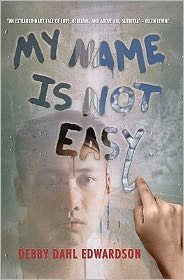
Debby Dahl Edwardson's MY NAME IS NOT EASY is a finalist for the National Book Award!
A hearty congratulations to Debby Dahl Edwardson! Today (October 12, 2011), her outstanding My Name is Not Easy was named as a finalist for the National Book Award! Here's a book trailer about her book:
In addition to the page at the NBA site, take a look at Debby's website. I'll add blog posts and news articles about the book as I find them.
- Barrow novelist Debby Dahl Edwardson is named as a finalist for the National Book Award, at Wasilla, Alaska, by 300, a blog by photographer, Bill Hess
- Debby's essay about the story she tells in My Name is Not Easy, at The Phantom Tollbooth, a blog by several writers of children's and young adult literature
Tuesday, October 11, 2011
Maurice Sendak's BUMBLE-ARDY
From the children's lit community to the Wall Street Journal, people are talking about Maurice Sendak's new book, Bumble-Ardy. Some readers like it, while others do not. Sendak first introduced the main character on a clip on Sesame Street years ago. In the clip, Bumble-Ardy is a nine year old boy has a birthday party at his house.
In the book, Sendak changes Bumble-Ardy into a pig, and when the pigs come to his house, it is by an invitation from Bumble-Ardy in which he says they must come in costume.
A few days ago, friend and colleague Thomas Crisp wrote to let me know that Sendak's illustrations in Bumble-Ardy include a character whose costume is of the playing-Indian type. Here's a close up:
That is from the first time we see that character. Many things to comment on, but let's stick with the costumes. Below is the full two-page spread when we first see the pigs in costume.
Help me figure out who or what they are! (I apologize for the overlap of the photo into the right column... If you want to see an even larger image, click on the photo. It should open just the photo in a new page.) Some of the pigs are wearing masks that cover their pig face; others do not wear masks. To varying degrees, they are just plain ridiculous.
If you've got some ideas and time to share them, write to me by using the "Contact AICL" button in the tool bar above, the comment box below, or by email.
From left to right:
1. Clown, no mask
2. Kind of reminds me of Groucho Marx, but no mustache. He is holding a balloon.
3. Wearing a skirt and an orange sweater, but that mask?!
4. Disheveled man with a cigar
5. Lost pig (holding sign), no mask
6. Rich lady (mask) and little pig (no mask)
7. Pirate
8. Pig-in-a-blanket
9. Like #3, I can't figure this one out. Wearing a dress but what is up with that mask?
10. Tiara and eye mask... (being ridden by #9)
11. Indian
12. Bearded policeman, no mask. What does that beard signify?
13. Court jester, no mask
Once I get a better idea of who the characters are dressed as, we can go on to do some analysis of the costuming.
By the way, Sendek is an old-hand, so to speak, at stereotyping American Indians. Remember his alphabet book, Alligator's All Around? The "Imitating Indians" page? The book was first published in 1962 by Harper and Row as one of four books packaged as "The Nutshell Library."
On the I page, we see two alligators who, the text tells us, are "Imitating Indians." There are many problems with the page. First, imagine what the response would be if the alligators were imitating a different racial or ethnic group! Second, most readers of AICL know that the word "Indian" obscures the diversity that exists across the over 500 American Indian Nations in the U.S. today. Third, the page suggests that Indians wear multi-colored feathered headdresses, and carry tomahawks and smoke peace pipes. And of course, they do that and everything else with stern or stoic expressions. And, let's not forget that they raise an arm to say "how" (cuz that's how Indians say hello... NOT).
Sadly for us all, Sendak is still giving us stereotyped Indians.
In the book, Sendak changes Bumble-Ardy into a pig, and when the pigs come to his house, it is by an invitation from Bumble-Ardy in which he says they must come in costume.
A few days ago, friend and colleague Thomas Crisp wrote to let me know that Sendak's illustrations in Bumble-Ardy include a character whose costume is of the playing-Indian type. Here's a close up:
That is from the first time we see that character. Many things to comment on, but let's stick with the costumes. Below is the full two-page spread when we first see the pigs in costume.
Help me figure out who or what they are! (I apologize for the overlap of the photo into the right column... If you want to see an even larger image, click on the photo. It should open just the photo in a new page.) Some of the pigs are wearing masks that cover their pig face; others do not wear masks. To varying degrees, they are just plain ridiculous.
If you've got some ideas and time to share them, write to me by using the "Contact AICL" button in the tool bar above, the comment box below, or by email.
From left to right:
1. Clown, no mask
2. Kind of reminds me of Groucho Marx, but no mustache. He is holding a balloon.
3. Wearing a skirt and an orange sweater, but that mask?!
4. Disheveled man with a cigar
5. Lost pig (holding sign), no mask
6. Rich lady (mask) and little pig (no mask)
7. Pirate
8. Pig-in-a-blanket
9. Like #3, I can't figure this one out. Wearing a dress but what is up with that mask?
10. Tiara and eye mask... (being ridden by #9)
11. Indian
12. Bearded policeman, no mask. What does that beard signify?
13. Court jester, no mask
Once I get a better idea of who the characters are dressed as, we can go on to do some analysis of the costuming.
By the way, Sendek is an old-hand, so to speak, at stereotyping American Indians. Remember his alphabet book, Alligator's All Around? The "Imitating Indians" page? The book was first published in 1962 by Harper and Row as one of four books packaged as "The Nutshell Library."
Sadly for us all, Sendak is still giving us stereotyped Indians.
Sunday, October 09, 2011
Great news! Richard Van Camp's THE LESSER BLESSED in production
Last week, auditions were held for parts in Richard Van Camp's outstanding novel, The Lesser Blessed.
This movie is one to keep an eye on... Here's the website: The Lesser Blessed.
Labels:
richard van camp,
The Lesser Blessed
Friday, October 07, 2011
MY NAME IS NOT EASY, by Debby Dahl Edwardson
Yesterday I read Debby Dahl Edwardson's My Name Is Not Easy. It is a powerful novel, moving me in the same ways that Joseph Bruchac's Hidden Roots did. Powerful governmental institutions did some really horrible things to Indigenous people.
My Name Is Not Easy is one of those novels that brings those horrible events to a wide audience. Joe wrote about sterilization in his novel; Debby writes about using Alaska Native children in boarding schools to conduct experiments involving radioactive iodine. I didn't know about those tests.
There's more, too. A child being taken from his family, abuse at the hands of a Catholic priest...
Because of the story itself, and the power and grace and beauty of Debby's writing as she recounts this family story, I highly recommend My Name Is Not Easy, and it will be one of the books I discuss when I do workshops and talks with teachers and librarians.
Read Debby's blog to see where she'll be speaking about the book. There, you'll also find contact information. Invite her to speak at your school. She lives in Alaska, but does Skype visits, too.
See a video of Debby's husband at a post from October of 2011.
My Name Is Not Easy is one of those novels that brings those horrible events to a wide audience. Joe wrote about sterilization in his novel; Debby writes about using Alaska Native children in boarding schools to conduct experiments involving radioactive iodine. I didn't know about those tests.
There's more, too. A child being taken from his family, abuse at the hands of a Catholic priest...
Because of the story itself, and the power and grace and beauty of Debby's writing as she recounts this family story, I highly recommend My Name Is Not Easy, and it will be one of the books I discuss when I do workshops and talks with teachers and librarians.
Read Debby's blog to see where she'll be speaking about the book. There, you'll also find contact information. Invite her to speak at your school. She lives in Alaska, but does Skype visits, too.
See a video of Debby's husband at a post from October of 2011.
Tuesday, September 27, 2011
The Horn Book Magazine, 1959
I'm in Santa Fe at the state library doing homework for one of my MLIS courses. Setting that work aside for a few minutes to peruse the shelves, I've come across The Horn Book Magazine. On the open shelves, they've got issues going waaaaaaay back, so, I pulled out the issue for the month and year of my birth. A bit egocentric, I admit.... Here's what I see:
To the right is the cover for the April issue. The illustration is used on all covers (1959 and 1960) in the box I pulled. And here's the short list of articles in the February issue:
A New Look at Heroes of the Southwest, by Camilla Campbell
Theodore Roosevelt and Children's Books, by Peggy Sullivan
A Children's Literary Tour of Great Britain, by Joan H. Bodger
Course, given the topic of AICL, I'm intrigued by the first article. Heroes of the Southwest? Heroes for who, I wonder? Turning the page, I see an illustration at the of the title page. It shows three men on horses. The horses are drinking from a river. The men are wearing uniforms. The table of contents tells me that it is a drawing by Harve Stein for Coronado and His Captains. That book was written by Camilla Campbell, the author of the article, A New Look at Heroes of the Southwest. I'll get to the article in a minute, but for now, I'll keep on with my page-by-page study of the issue.
The Hunt Breakfast on page 2 tells me that Campbell was born and raised in Texas. Her article is an edited version of a talk she gave at the Texas Library Association on March 29th, 1958. Coronado and His Captains is reviewed in this issue.
Page 6 is an ad for the World Book Encyclopedia. At the top of the page is an illustration that includes a totem pole, a newspaper, an airplane, an oil derrick, a lake... I wonder what the encyclopedia entry for totem pole says?
Page 7 has an ad for Thomas Nelson & Sons. It includes:
Page 8 is about Macmillan Books for Boys and Girls, Spring, 1959. It includes:
Page 13 is the ad page for The World Publishing Company. They feature Indians written and illlustrated by Edwin Tunis. In it, he "re-creates the everyday life of the American Indian before the arrival of the white man. A treasure house of a book which presents every aspect of Indian life in lively text and more than 230 drawings." Wow! Sounds comprehensive. I wonder if Tunis distinguishes one tribal nation from another?
On page 16 is another illustration by Stein for Coronado and his Captains. It shows Coronado's route from Mexico city and up into Arizona, New Mexico, Texas, Oklahoma, and Kansas. Campbell's article starts on page 17. I'll study and write about it later.
The "Late Winter Booklist" of recommended (and reviewed) books starts on page 31. "Spanish Heroes in the New World" starts on page 38. That is where Coronado and his Captains and Protector of the Indians are reviewed. So is Maud Hart Lovelace's What Cabrillo Found (he "found" California).
On page 74 is information about the Lewis Carroll Shelf Award, a new award given by the University of Wisconsin School of Education and state organizations in Wisconsin. Publishers submit titles and a committee of librarians, teachers, parents, and writers selected 16 books. Among them is Laura Ingalls Wilder's Little House in the Big Woods. I've written about that book before... it is the one in which Pa, as a child, played at hunting Indians. On page 53, Wilder wrote:
Finishing my page-by-page study of the February issue, I see more ads on the closing pages. Julian Messner's list includes a book by David C. Cooke, called Tecumseh: Destiny's Warrior, and Robin McKown's Painter of the Wild West: Frederick Remington. Hastings House offered Red Eagle by Shannon Garst, illustrated by Hubert Buel. The ad says it is a "true-to-life story of how a Plains Indian boy overcomes his handicaps and becomes a brave. Based on actual facts about the Sioux." Farrar, Straus & Cudahy were pushing Kit Carson of the Old West by Mark Boesch, illustrated by Joshua Tolford. It is a "sparkling" biography about Kit Carson's career, which included "Indian scout."
That's it for now... I've gotta run to the copy machine to copy Campbell's article. The library closes in 25 minutes. Sorry for typos, lack of clarity, etc. in my rush to load this post.
To the right is the cover for the April issue. The illustration is used on all covers (1959 and 1960) in the box I pulled. And here's the short list of articles in the February issue:
A New Look at Heroes of the Southwest, by Camilla Campbell
Theodore Roosevelt and Children's Books, by Peggy Sullivan
A Children's Literary Tour of Great Britain, by Joan H. Bodger
Course, given the topic of AICL, I'm intrigued by the first article. Heroes of the Southwest? Heroes for who, I wonder? Turning the page, I see an illustration at the of the title page. It shows three men on horses. The horses are drinking from a river. The men are wearing uniforms. The table of contents tells me that it is a drawing by Harve Stein for Coronado and His Captains. That book was written by Camilla Campbell, the author of the article, A New Look at Heroes of the Southwest. I'll get to the article in a minute, but for now, I'll keep on with my page-by-page study of the issue.
The Hunt Breakfast on page 2 tells me that Campbell was born and raised in Texas. Her article is an edited version of a talk she gave at the Texas Library Association on March 29th, 1958. Coronado and His Captains is reviewed in this issue.
Page 6 is an ad for the World Book Encyclopedia. At the top of the page is an illustration that includes a totem pole, a newspaper, an airplane, an oil derrick, a lake... I wonder what the encyclopedia entry for totem pole says?
Page 7 has an ad for Thomas Nelson & Sons. It includes:
- Painted Pony Runs Away written and illustrated by Jessie Brewer McGaw. It is "an exciting story about a runaway pony told in authentic Indian pictographs."
- Protector of the Indians by Evan Jones. Illustrated by George Fulton, it is an "absorbing biography of the Indian's first friend, Bartolome de Las Casas.
Page 8 is about Macmillan Books for Boys and Girls, Spring, 1959. It includes:
- Xingu by Violette and John Viertel. Illustrated by Karla Kuskin, "this touching story of a little Indian boy and his animal friends has the universal appeal of a children's classic."
- The Mystery of the Aztec Idol by Harriett H. Carr is about an American boy who visits Mexico and "discovers a valuable relic eagerly sought by many people."
Page 13 is the ad page for The World Publishing Company. They feature Indians written and illlustrated by Edwin Tunis. In it, he "re-creates the everyday life of the American Indian before the arrival of the white man. A treasure house of a book which presents every aspect of Indian life in lively text and more than 230 drawings." Wow! Sounds comprehensive. I wonder if Tunis distinguishes one tribal nation from another?
On page 16 is another illustration by Stein for Coronado and his Captains. It shows Coronado's route from Mexico city and up into Arizona, New Mexico, Texas, Oklahoma, and Kansas. Campbell's article starts on page 17. I'll study and write about it later.
The "Late Winter Booklist" of recommended (and reviewed) books starts on page 31. "Spanish Heroes in the New World" starts on page 38. That is where Coronado and his Captains and Protector of the Indians are reviewed. So is Maud Hart Lovelace's What Cabrillo Found (he "found" California).
On page 74 is information about the Lewis Carroll Shelf Award, a new award given by the University of Wisconsin School of Education and state organizations in Wisconsin. Publishers submit titles and a committee of librarians, teachers, parents, and writers selected 16 books. Among them is Laura Ingalls Wilder's Little House in the Big Woods. I've written about that book before... it is the one in which Pa, as a child, played at hunting Indians. On page 53, Wilder wrote:
I began to play I was a mighty hunter, stalking the wild animals and the Indians.I don't think K.T. Horning at CCBC would select that book today.
Finishing my page-by-page study of the February issue, I see more ads on the closing pages. Julian Messner's list includes a book by David C. Cooke, called Tecumseh: Destiny's Warrior, and Robin McKown's Painter of the Wild West: Frederick Remington. Hastings House offered Red Eagle by Shannon Garst, illustrated by Hubert Buel. The ad says it is a "true-to-life story of how a Plains Indian boy overcomes his handicaps and becomes a brave. Based on actual facts about the Sioux." Farrar, Straus & Cudahy were pushing Kit Carson of the Old West by Mark Boesch, illustrated by Joshua Tolford. It is a "sparkling" biography about Kit Carson's career, which included "Indian scout."
That's it for now... I've gotta run to the copy machine to copy Campbell's article. The library closes in 25 minutes. Sorry for typos, lack of clarity, etc. in my rush to load this post.
Labels:
CCBC,
Horn Book Magazine
Friday, September 23, 2011
Another pair of eyeglasses...
I am enjoying my courses as a student San Jose State's School of Library and Information Science. Prior to this, I felt proficient using a handful of databases, but I'm learning just how much I do not know about databases... From ones I've never used to learning how to develop one... At times it is overwhelming, and my blog posts are definitely impacted by my need to study and get homework done.
Today, I'm sitting at the Pueblo of Pojoaque Public Library, using their computers for some surfing. Next week I'll deliver an online lecture to Minjie Chin's class at UIUC's Graduate School of Library and Information Science. I enter both spaces as a person with more knowledge about libraries than I had prior to beginning my coursework. You might say I've added another pair of eyeglasses that I'll be using from now on.
That said, I highly recommend Mitali Perkin's How to Write Fiction Without The "Right" Ethnic Credentials. She's speaking directly to writers but much of what she says can be used by anyone who is thinking about books and American Indians. Reading her essay, and AICL, can give you another pair of eyeglasses, too, to use as you work with children's and young adult literature.
Today, I'm sitting at the Pueblo of Pojoaque Public Library, using their computers for some surfing. Next week I'll deliver an online lecture to Minjie Chin's class at UIUC's Graduate School of Library and Information Science. I enter both spaces as a person with more knowledge about libraries than I had prior to beginning my coursework. You might say I've added another pair of eyeglasses that I'll be using from now on.
That said, I highly recommend Mitali Perkin's How to Write Fiction Without The "Right" Ethnic Credentials. She's speaking directly to writers but much of what she says can be used by anyone who is thinking about books and American Indians. Reading her essay, and AICL, can give you another pair of eyeglasses, too, to use as you work with children's and young adult literature.
Subscribe to:
Posts (Atom)