Thursday, September 21, 2023

A Remarkable Headline

Typically, AICL looks at books for young people. Today, I (Jean) am inspired to do something a little different: a close reading of a headline about a book for young people. Its origin is Alaska's News Source, (KTUU/KYUS in Anchorage) September 17, 2023. Here's a screen shot, and the whole story is here. (To view the video, you have to wait a bit to skip an advertisement.)


Context: The woman holding the book in the photo is Nasuġraq Rainey Hopson. I met her when Debbie and I attended Loonsong Turtle Island in 2018. She's from the North Slope of what's currently known as Alaska. 

It's a remarkable headline for several reasons. Let's go piece by piece. And you should know that I'm learning as I go, and I hope someone will tell me if I get something wrong! The headline reads, 

Iñupiaq author and illustrator's book "Eagle Drums" sells out at book signing

1) Iñupiaq... That's not a word often seen in headlines where I am, in what's sometimes known as The Lower 48. Here's what the Alaska Native Language Center website says about it:

The name "Iñupiaq," meaning "real or genuine person" (inuk 'person' plus -piaq 'real, genuine'), is often spelled "Iñupiaq," particularly in the northern dialects. It can refer to a person of this group ("He is an Iñupiaq") and can also be used as an adjective ("She is an Iñupiaq woman"). The plural form of the noun is "Inupiat," referring to the people collectively ("the Inupiat of the North Slope").

So, the person who's the focus of the photo, the headline, and the story is from the homelands of the Inupiat -- an Iñupiaq woman. It's significant that the headline-writer didn't use a generic term like "Alaska Native." Eagle Drums is a specifically Iñupiaq book.

2) ...author and illustrator's...  Not only did Nasuġraq Rainey Hopson get her story published -- she also made the art for it! That's not unheard-of in child lit circles, of course, but it's still a bit out of the ordinary. And the pool of Iñupiaq author-illustrators is small indeed. There's a chance she's the only one. 

Check out her art and info about her other publications on her website, which features the covers of two anthologies that include short stories she wrote.


3) ... book Eagle Drums ... This middle grade novel came out just this month (September 2023) from Macmillan, which has also published Turtle Mountain Ojibwe author Carole Lindstrom's We Are Water Protectors (illus. by Caldecott Medal winner Michaela Goade, Tlingit/Haida). Here's what the publisher says about Eagle Drums:

A magical realistic middle grade debut about the origin story of the Iñupiaq Messenger Feast, a Native Alaskan tradition.
As his family prepares for winter, a young, skilled hunter must travel up the mountain to collect obsidian for knapping—the same mountain where his two older brothers died. When he reaches the mountaintop, he is immediately confronted by a terrifying eagle god named Savik. Savik gives the boy a choice: follow me or die like your brothers. What comes next is a harrowing journey to the home of the eagle gods and unexpected lessons on the natural world, the past that shapes us, and the community that binds us.

4) ... sells out at book signing. Let's sit with that for a moment. When a book sells out at a signing event, it's because readers have shown up for it. That's evidence of a demand for the material. For far too long, we would hear that there just wasn't a market for Indigenous stories told by Indigenous people. Non-Indigenous writers were the ones who could tell --and sell -- stories about Native lives. But as the headline suggests, people were at this event, eager to buy a new book by an Indigenous (specifically Iñupiaq) author, and to have her sign it!

Much more could be said about the event, about Eagle Drums, and about Nasuġraq Rainey Hopson herself, but I came here to share a close look at that unusual headline. 

Here's what the book cover looks like. Take a close look at the art -- it tells readers just enough about the story to invite them in. And I think it's gorgeous!

We hope you'll get your own copy of Eagle Drums, read it, share it -- and if the book tour comes to your area, ask the author to sign it in person! 

Sunday, September 17, 2023

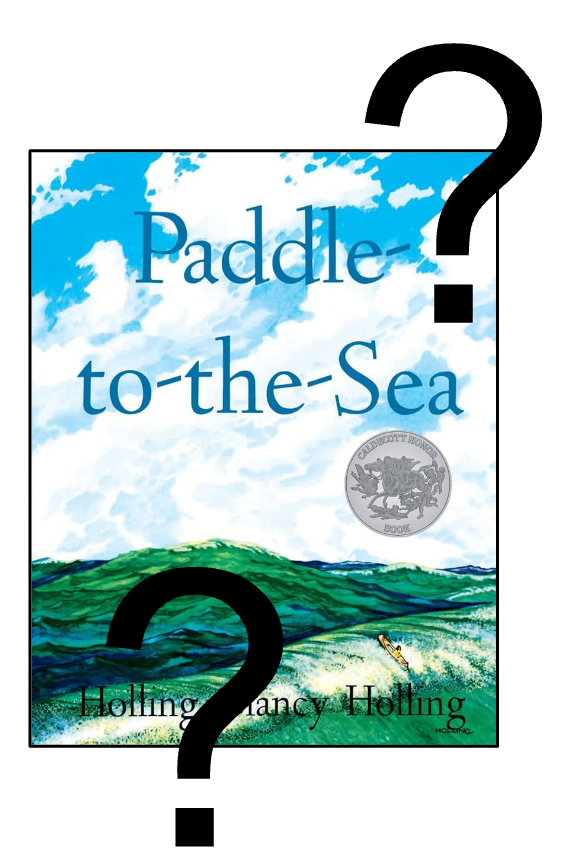
Debbie--have you seen TREE IN THE TRAIL or PADDLE-TO-THE-SEA by Holling Clancy Holling?

Every once in awhile I get an email or comment asking if I've seen a book by Holling Clancy Holling. It might be Tree in the Trail (published in 1942) but more often, people ask about Paddle-to-the-Sea. It came out in 1941 and won a Caldecott Honor. 

Can a book with Native content, published 80+ years ago, be used in classrooms today?

This post is intended to help teachers (or anyone who is considering a book's Native content) make a decision about the book they're considering. 

First, what is your goal? I'm going to assume that you're trying to provide children with stories that accurately depict Native peoples. That means providing the name of a specific nation. That means a story that is tribally specific. If it is about an "Indian" or "American Indian" or "Native American" or "Indigenous" character, that story is not tribally specific and there's likely to be a hodgepodge of content that is not educational. An example of a hodgepodge is a story about an Indian who lives in a tipi and next to it, a totem pole. 

Second, who is the author? If you're trying to give students an authentic story, it is important to know if the author is of the particular Native Nation or community the story is about. If they are not and if they did not live there, what are their sources for creating the story? Sometimes you'll find that information in an author's note, but older books generally do not include that information. 

Let's use Paddle-to-the-Sea to answer these questions. 

Holling Clancy Holling wrote and illustrated Paddle-to-the-Sea. He is not Native. Now let's look at his book. 

Chapter 1 is "How Paddle-to-the-Sea Came To Be." The first sentence is "The Canadian wilderness was white with snow." The second paragraph begins with sounds. Here's the rest of that paragraph: 
'Geese! cried the Indian boy standing in the door of the cabin. 'They come back too soon. I must hurry to finish my Paddle Person!'
"the Indian" is all we're told about him. We are not told the name of his Tribal Nation or community. We do learn that the "Paddle Person" he is making is an Indian he's named Paddle-to-the-Sea. The carved Indian is placed in a foot-long birchbark canoe the Indian boy has made. It is then placed on a snow bank. When "Sun Spirit" shines on it, it will melt and be carried to a river, and then to the Great Lakes, on adventures the boy wold like to have. The rest of the book is about its travels. 

We're given a name for the sun: "Sun Spirit." With the word "Spirit" in there, it takes on something that sounds like it is part of a Native peoples' spiritual teachings, but is it? 

I see that there are curricular materials available. The book has appeal because of the Great Lakes. It provides teachers with a way to teach science. 

But should it be used that way when we know the Native content is not tribally specific? My answer to that question is no. What do you think? 

Friday, September 01, 2023

A Storywalk Featuring Nancy Cooper's BIINDIGEN! AMIK SAYS WELCOME

In the past few months, I've done several blog posts about Native people or their books or art being part of what the public sees when they're out and about. I'm delighted to do another of those posts today. 

As I scrolled through social media yesterday I saw this photo and did one of those "WAIT!" exclamations in my head. I recognized the book on the storywalk sign immediately. I wanted more information!


The book on the sign is Biindigen! Amik Says Welcome. Written by Nancy Cooper (member of the Chippewas of Rama First Nation) and illustrated by Joshua Mangeshig Pawis-Steckley (Ojibwe, member of Wasauksing First Nation)  here's the cover of the book on that sign:


Storywalks are one way of bringing visibility to books. This particular storywalk is in the City of Vaughan in Ontario, Canada at Sugarbush Heritage Park. The Vaughan Public Library has a blog post about the storywalks, and says this about Biindigen!:
This educational picture book follows Amik the beaver and her little sister Nishiime as they prepare to meet their cousins, while teaching young readers about beavers and their role in the Canadian environment.
I'd add that anyone who reads this book has the chance to learn some Native words. Regular readers of American Indians in Children's Literature know that I especially love seeing the word 'nation' in books for children. That's here, too, in the final pages. 

Visibility! It matters. If you do storywalks for your community, please add books by Native writers. If you need suggestions let me know! I'm glad to help.

Wednesday, August 30, 2023

A Request Regarding Records of Native Students at Boarding Schools

Those of you who follow Native news know that Secretary of the Interior, Deb Haaland, launched an investigation into boarding schools for Native children. It included finding out how many schools there were, what kind (some were mission schools run by churches), burial sites at the schools, and identification of children went to them. The first report came out in May of 2022. 

It is crucial that these investigations be done. 

It is also crucial that writers and educators be respectful regarding the findings of those investigations. More and more records are being released. Today, news media indicates that databases will be made available. The Washington Post says the digital archives will give "easier access to historians and families still searching for information about their loved ones." 

In the 1990s, I read a book by Ann Rinaldi. It was part of the Dear America series. Set at one of the schools, the ways she used actual names and stories she found in historical archives, was horrific. Utterly disgusting. It was painful to read. 

As more records are becoming available, I am making this request that non-Native writers refrain from mining the archives to create characters and stories. I understand that you may view yourself as an ally but you may inadvertently tread into areas that are far from healed. You may inflict further harm onto Native communities. Leave our stories alone. 


My grandmother (my dad's mother) went to one of the schools in the early 1900s. She told me some things when I was a kid but she didn't talk much about her time there. Did she keep painful things back? Do the records have details in them that she did not share with me? I don't know. My mother's father was Hopi. He also went to one of the schools and met the woman he'd eventually marry. I don't have any stories from them at all. He never talked about it and she died when my mother was a little girl. I do not want an Ann Rinaldi to dig into their records and use their names and information in the records to create a story. 

And so I make my request. Leave our stories alone.

I know--some of you are going to be thinking about First Amendment and freedom of speech and all those things that you think mean you can do anything you want. In fact, you can and many of you have already done such things. You may mock my request as naive. If that's you, not much anyone could say would help you be sensitive. But if you're one who wants to be respectful, I hope my request is helpful. 

I'm not speaking for every Native person. For certain I am asking you to leave stories about my own ancestors alone. 


Tuesday, August 29, 2023

It's Marcie Rendon!

Some time back I did a series of posts about Native illustrators whose work was being used in unusual ways -- like the city bus that features the work of Marlena Myles. 

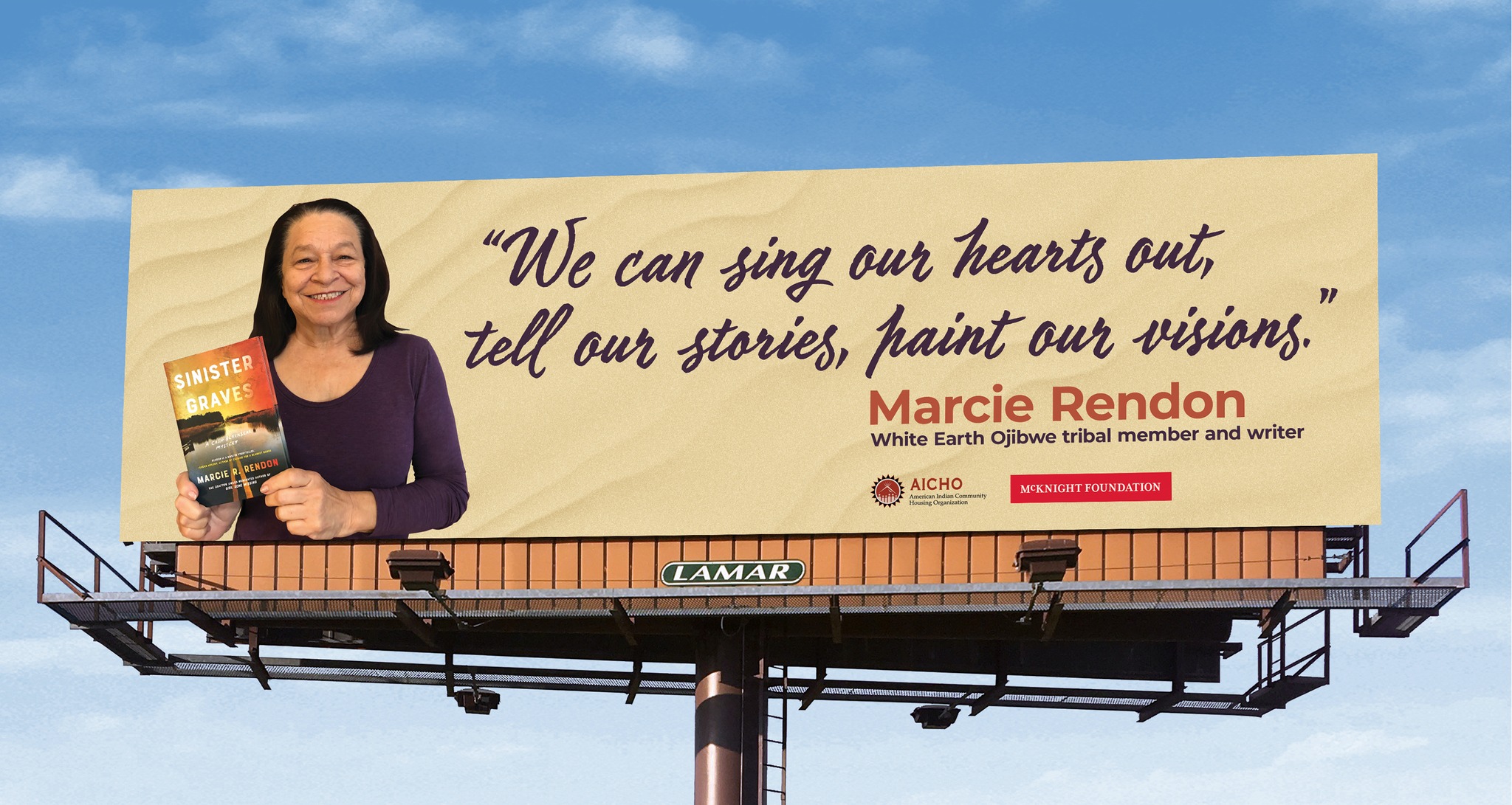
Today on social media, I saw a photograph of a billboard. I paused and exclaimed "That's Marcie!" Here's what I saw: 

Photo credit: American Indian Community Housing Organization

Marcie is holding a copy of Sinister Graves which is the third book in her mystery series that feature a young woman named Cash Blackbear. 

The photo was shared on social media by the American Indian Community Housing Organization (AICHO) in Duluth Minnesota. They organization's post said:
"We can sing our hearts out, tell our stories, paint our visions." Quote by Marcie Rendon, White Earth Band of Ojibwe Nation tribal member and award winning author, poet, and screenplay writer. This billboard is now up on display next to AICHO's building in Duluth on 2nd Street for four weeks.

Miigwech, Marcie Rendon, for sharing your Indigenous stories that remind us who we are as a people, for advocating for women and issues that impact Indigenous peoples, and for all that you write!

To find more out about Marcie Rendon: www.marcierendon.com

Miigwech to McKnight Foundation for funding this and AICHO's Cultural Arts themed billboards and helping AICHO to promote, uplift and showcase Indigenous authors and artists.

I met Marcie at least ten years ago and have been reading what she writes since then. Below I'll share covers of some of her books. Go to her site and you'll find more she's written. When I read what she writes, I feel the stories. What I mean is that I know Native people like the ones she has in her books. Their good moments and the not-good ones, too. There's an intangible quality in her stories that may be possible because of her good heart. 

Let's start here. Listen to Marcie in this video:


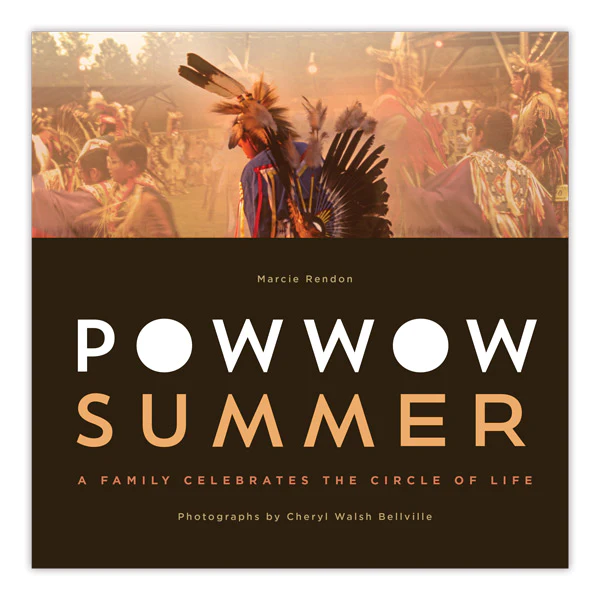
Now, some of her books! This is her non-fiction picture book, Powwow Summer with photographs by Cheryl Walsh Bellville. 


Read her short story, "Wonder and Worry," in this middle-grade anthology:


I adore her story "What's an Indian Woman to Do?" in When the Light of the World was Subdued, Our Songs Came Through -- an anthology edited by Joy Harjo that should be in every English lit course in high schools across the country.


And here's the Cash Blackbear series. They're for adult readers but I wouldn't hesitate to share them with older teens. 


Look for and read her books. And if you're in Duluth, snap a photo of the billboard and share it on your social media accounts. And tag me if you can (I'm debreese on Twitter). 

Sunday, August 27, 2023

Highly Recommended: ROCK YOUR MOCS, written by Laurel Goodluck, illustrated by Madelyn Goodnight

Rock Your Mocs
Written by Laurel Goodluck
Illustrated by Madelyn Goodnight
Published by Heartdrum
Published in 2023
Reviewer: Debbie Reese
Review Status: Highly Recommended


Several years ago on Native social media, I saw people talking about plans to wear their moccasins for "Rock Your Mocs" day. On that day, we took photos of our mocs and shared them joyously in a way that radiated an Indigenous solidarity vibe (I'm borrowing that phrase from page 12 of Cynthia Leitich Smith's new book, Harvest House.) I felt a tremendous lift, scrolling through my timelines and looking at the many different kinds of moccasins people were wearing. If you want to see what I mean, search #RockYourMocs on social media. 

A couple of years ago when I saw that Laurel Goodluck and Madelyn Goodnight were doing a picture book about Rock Your Mocs day, I was absolutely delighted! Turning that day into a picture book is brilliant! It is one way to show readers that Native peoples are people of tribal nations located across the continent, and that our names, languages, histories, stories, songs homes--and clothing--are unique.

Just look at that cover and you'll see another huge plus. Those are Native kids of the present day.  The art is gorgeous, the idea is brilliant and the opportunity to know us for who we are: outstanding! 

When you start reading you'll come across the names of twelve different tribal nations, which means that children of those nations have mirrors that reflect who they are. Books as mirrors is a metaphor put forth by Dr. Rudine Sims Bishop in 1991 (read her article and you'll understand the metaphor). 

Those twelve? Colville, Hidatsa, Hopi-Tewa, Inupiaq, Little Shell Chippewa, Menominee, Navajo, Ojibwe, Osage, Seminole, Tuscarora, and Yurok. 

Goodluck's text is ebullient. Here's a look at the left-side of one page. "Indigenous Nations." "...in cities and towns..." and "We're stylin' today as we Rock Our Mocs!" All of that is terrific. And the decision to put "Rock Our Mocs" in a larger font size than the rest of the text works so well!


Here and there you'll see Native words. On one page, Ajuawak (he's the Ojibwe child) is standing at a chalkboard on which someone has written Ojibwe words for numbers from 1 to 10. I can see a teacher doing that for other Native languages. 

In the final pages -- which I strongly encourage you to read -- you'll find three helpful sections of background. First is a brief history of Rock Your Mocs Day and that it began in 2011 when Jessica "Jaylyn" Atsye of Laguna Pueblo suggested wearing mocs beyond days when we wear them for ceremonies or powwows. Second is information about moccasins, and third is a section titled Indigenous Children. There, you'll learn that Native children may be intertribal, or bi- or tri-cultural. I can use myself as an example. My mom is from Ohkay Owingeh. Her mother was from there and her father was Hopi. My dad is from Nambé Owingeh. His mother was from there and his father was white. In terms of tribal identity, I'm enrolled at Nambé, but I also have Ohkay Owingeh and Hopi relatives. Raised and enrolled at Nambé, my traditional moccasins and clothing are the kind worn at Nambé. 

I adore what I see in Rock Your Mocs and recommend you get copies for your classroom and school library and that you consider getting one for your home library, too. And gift copies to friends! 


HIGHLY RECOMMENDED: REZ BALL BY BYRON GRAVES


Rez Ball 
Written by Byron Graves (Ojibwe)
Cover by Natasha Donovan (Métis)
Published by Heartdrum
Published in 2023
Reviewer: Debbie Reese
Review Status: Highly Recommended


Earlier this month I was in San Diego at the California Indian Ed for All 2023 Summit. I was invited to give a presentation about children's books. During that trip I was reading an advance copy of Rez Ball by Byron Graves. At the gathering during breaks or meals, I'd tell people 'Hey! I'm reading this new book, Rez Ball....' and I'd tell them a bit about what I'd been reading. Their faces lit up and I was glad to see them jotting down the title. For me, and them, and so many Native kids, basketball is the game!

The morning of my departure, I was so caught up by the book that I nearly missed my plane! 

I'm one of the Native kids who grew up on a reservation where playing basketball was the thing. In high school some of my cousins from Nambé played on the basketball team. Years later, I taught at a school for Native kids and can't tell you have many times I got hoarse, cheering for our teams (especially when we were making it to state championship games). Then came a years-long span of time when I wasn't watching games. But then last year we moved to California and I started following the NBA. 

When I was reading Rez Ball and came across references to Steph Curry, and LeBron, and Kevin Durant, I texted friends to tell them! I gotta say, there were many exclamation points in my texts. 

****

You can tell: I really like this book! Here's the synopsis:

These days, Tre Brun is happiest when he is playing basketball on the Red Lake Reservation high school team—even though he can’t help but be constantly gut-punched with memories of his big brother, Jaxon, who died in an accident.

When Jaxon's former teammates on the varsity team offer to take Tre under their wing, he sees this as his shot to represent his Ojibwe rez all the way to their first state championship. This is the first step toward his dream of playing in the NBA, no matter how much the odds are stacked against him.

But stepping into his brother’s shoes as a star player means that Tre can’t mess up. Not on the court, not at school, and not with his new friend, gamer Khiana, who he is definitely not falling in love with.

After decades of rez teams almost making it, Tre needs to take his team to state. Because if he can live up to Jaxon's dreams, their story isn’t over yet. 


Set on the Red Lake Reservation, Rez Ball is by a Native writer, and it is tribally specific through and through. Those are the two main things I look for as I read a book. In Rez Ball, there's families and cousins, and hanging out with them. Homes have Native art on the walls. Families serve Kool-Aid. Ojibwe words and rez-slang are mixed into their everyday speech. Kids read books by Native writers... It is way cool to see one reading Dawn Quigley's Apple in the Middle! And that passage about the Indigenous Baby Yoda shirt? Well, that was perfection! Across the country, Native people wrap baby Yoda with a warm embrace. Native people went all-out on social media, sharing memes and items they made.

In Rez Ball, there's teen parties where kids are drinking. And there's harsh realities, too. Native kids are profiled by security officers at shopping centers off-rez, and by police. And they deal with rivals who taunt them with anti-Indigenous slurs. 

Life of Native kids on reservations -- Byron Graves gives it to us straight. The joys and the tears... it is all here. As noted above, I highly recommend Rez Ball and I look forward to seeing what Byron Graves writes next! 

Monday, August 21, 2023

Dear Teachers: A Series of Open Letters about Scott O'Dell's Books. Open Letter #1 - Suns and Moons

August 20, 2023

Dear Teachers, 

You (or one of your colleagues) have written to me about Scott O'Dell's Thunder Rolling in the Mountains. Some of your schools have been using it for years and some of your schools use it because it is in the Wit and Wisdom curriculum. Those who have written to me sense that it is not a good choice. They're in Wisconsin. Oregon. California. Tennessee. Louisiana. Ohio. Alabama. New York. 

Because this is an Open Letter that may be shared with school administrators and others who don't know who I am, I'll start with some biographical introduction. I'm tribally enrolled at Nambé Owingeh, a sovereign Native Nation in the southwestern part of the US. I started my professional career as a school teacher in Albuquerque and later got a PhD in Education at the University of Illinois Urbana Champaign. My research and publications are focused on depictions of Native peoples in children's and young adult books. 

At Illinois I served as president of the Native student group where we focused on three goals: a Native American House that would support the needs of Native students, an American Indian Studies program that would hire Native professors and provide all students with courses on Native peoples, and for a change in the university's mascot (it was "Chief Illiniwek"). I received my doctorate in 2000 and held a post doctoral position from 2002-2004. In 2002, the Native House was founded. In 2005, the Board of Trustees approved the American Indian Studies Program. In 2007, the university got rid of the mascot. 

Some of you may be a bit confused because you've been thinking of us as "tribes." You were educated and socialized to think of us as tribes but, in fact, the tribes are hundreds of distinct nations of Native people. When Europeans came onto our homelands hundreds of years ago, they knew we were nations. And when the U.S. became a nation, its leaders knew we were nations, too. There's hundreds of treaties between various Native Nations and those who came onto our lands.

Who I am, what I know as a Native woman, and what I study shapes what you find in my book chapters, research and professional articles, and on my blog, American Indians in Children's Literature.  A few weeks ago, I did a "close read" of Thunder Rolling in the Mountains. When I do a close read, I write up notes as I read. I ask questions. If there are misrepresentations or bias or factual errors, I note them, and then I share the notes. Anybody can get a copy of the book, start reading, and look over my notes as they do. 

O'Dell's book was published in 1992 by Houghton Mifflin. You may have a copy with a different cover because it has been reissued many times since then. 


In textbooks and professional guides for those who teach, study, review or critique children's books, there are some common elements. In From Cover to Cover, Kathleen T. Horning writes that we should try to determine what sort of authority the author has. Generally it means that we should see if the author has training or expertise on the topic the book is about. 

Given my identity and area of study I also ask if the author is Native.

The cover of Thunder Rolling in the Mountains lists two authors: Scott O'Dell and Elizabeth Hall (she was O'Dell's wife). My guess is that most teachers recognize the name, "Scott O'Dell," because they probably read his books when they were in school. They may know he won awards for some of his books. 

But returning to the question: did he have training or expertise on Native peoples? Was he Native? 

Scott O'Dell was not Native and did not have a degree that might have given him the authority that Horning asked us to look for. At his website, he wrote that he went to three different colleges but I don't see any indication of what he studied at them, and he also doesn't say that he graduated from any of them. Author identity and expertise are a starting point. What the author creates is important, too. 

When I did my close read of Thunder Rolling in the Mountains, I saw O'Dell used "moons" and "suns" to signify passage of time. Because I've studied children's books about Native peoples for over 30 years I've seen other non-Native writers do it. I wondered if O'Dell did it in his other books.

He wrote several children's books about Native people of different tribal nations. Those nations include ones on the west coast, the southwest, and the northwest. They have very different histories, religions, songs, and stories. And, they spoke different languages. Let's look at four of them:
  • Island of the Blue Dolphins came out in 1960. It is set in the 1850s. O'Dell based it on a Native woman whose people lived on an island off the coast of California. In the mid 1830s, they were taken to the mainland. She remained (or was left) on the island, living alone until 1853 when she was also taken to the mainland. She and her people are called "Nicolenos" because their island was called "San Nicolas Island" by White people. I wonder what they called their island, and what they called themselves--in their language?
  • Sing Down the Moon came out in 1970. Set in the 1860s, it is about the Navajo people (some prefer to be called Diné which is their word for "the people") and their forced removal from Diné Bikéyah, or Dinétah (their homeland). Their removal is commonly called The Long Walk. 
  • Streams to the River, River to the Sea: A Novel of Sacagawea came out in 1986. As the title indicates, it is about Sacagawea as a member of Lewis and Clark's expedition in 1804. 
  • Thunder Rolling in the Mountains came out in 1992. It is set in the 1870s and is about Chief Joseph, a Nez Perce leader, and his people being forced off of their homelands. O'Dell tells us about it through the perspective of his daughter. 
O'Dell (a white male) wrote from the point of view of female characters of four different tribal nations who lived in the 1800s--a very different era. To do so, he had to imagine and create the thoughts, emotions, and dialog for characters (some of them were actual people) whose first language was not English and whose culture was different from his. Let's look at some of what he wrote.

In chapter one of Thunder Rolling in the Mountains, O'Dell has Sound of Running Feet (the main character) thinking:
I had not ridden the trail for many moons.

 And a few sentences later, another character says: 

"We told our mothers before we left to dig roots that we would be gone three suns."
In chapter one of Island of the Blue Dolphins, O'Dell has Karana (the main character) thinking this about her brother:
He was small for one who had lived so many suns and moons
In chapter 10 of Streams to the River, River to the Sea: A Novel of Sacagawea, O'Dell has Sacagawea saying (about Charbonneau), that
"He will be gone for many suns."
In chapter 20 of Sing Down the MoonO'Dell's main character, Bright Moon, is thinking:
Within the rising and waning of five moons my baby would be born.

In each of those sentences, all the words are English ones. O'Dell could have said day/days or night/nights instead of moons/suns. Why did he use "suns" and "moons" instead? 

I suspect it started with James Fenimore Cooper. A lot of the things Cooper came up with when he wrote The Last of the Mohicans in 1826 have been used by other writers. In chapter three, he has
"We said the country should be ours from the place where the water runs up no longer on this stream, to a river twenty sun's journey toward the summer."
Earlier in the chapter, we see this:
"Even your traditions make the case in my favor, Chingachgook," he said, speaking in the tongue which was known to all the natives who formerly inhabited the country between the Hudson and the Potomac, and of which we shall give a free translation for the benefit of the reader; endeavoring, at the same time, to preserve some of the peculiarities, both of the individual and of the language."
Peculiarities? What might those be? I think his use of "sun's" is one of those peculiarities. As I think about what Cooper meant, I realize it really doesn't matter. What matters is that others--like O'Dell--use it, too, as if Native people of four entirely different nations in entirely different locations and time periods, used it. 

What O'Dell did, I think, is a failure. Teachers who assign his books may inadvertently be encouraging kids to think that many Native people used sun/moon instead of night/day to mark time. That's not educational! 

I'm not criticizing teachers for using Thunder Rolling in the Mountain (or one of his other books) if it is part of what your school requires. I am, however, asking you to consider studying it, and talking with your fellow teachers and administrators about the book. And if you decide his books cannot be used in your classroom, I hope you'll write to your district's curriculum officer and to the entities (like the company that publishes the Wit and Wisdom curriculum) to ask them to stop using the book, and that your letter will explain why you think the book is mis-educating students. 

When I started this post, I titled it "Dear Teachers: An Open Letter about Scott O'Dell and Elizabeth Hall's THUNDER ROLLING IN THE MOUNTAINS, and I meant to be comprehensive, addressing most of the things I noted in my close read. But as I worked on it, I felt overwhelmed. I decided I didn't want to overwhelm you. Instead, I decided to present my research as a series, titled "Dear Teachers: A Series of Open Letters about Scott O'Dell's Books. Open Letter #1 - Suns and Moons." I welcome your comments and if you prefer to write to me directly, you can find my email address in the contact link. I will not share what you say without your permission. 

I think my second letter in the series will be about quotes. O'Dell has characters speaking certain words and phrases that real people said, and that are findable in books and other historical records. 

That's all--for now,
Debbie

Monday, July 24, 2023

Highly Recommended: Christine Day's WE STILL BELONG


We Still Belong
Written by Christine Day (Upper Skagit)
Cover art by Madelyn Goodnight (Chickasaw)
Published in 2023
Publisher: Heartdrum
Reviewer: Debbie Reese
Review Status: Highly Recommended

Publisher's synopsis:
Wesley is proud of the poem she wrote for Indigenous Peoples’ Day—but the reaction from a teacher makes her wonder if expressing herself is important enough. And due to the specific tribal laws of her family’s Nation, Wesley is unable to enroll in the Upper Skagit tribe and is left feeling “not Native enough.” Through the course of the novel, with the help of her family and friends, she comes to embrace her own place within the Native community.

 ****


What I particularly like about Christine Day's books is that she includes things that I know kids know about. For example, young people are way into video games and gamer culture. More about that later.

Early on in her book, we learn that Wesley and her mom are living with Wesley's grandpa, aunt and uncle and their baby. Across Indian Country, you'll find Native homes where more than one generation is living together. Generally speaking, white families in the US don't live that way but Native ones often do. Whether it is just the way it was from day one or if it is because someone is in need of help, you'll often find more than one generation living together.

Ok--I said "later" about gamer culture but I'm jumping to it right now. It is morning. Wesley and her mom are awake before the rest of the family. Wesley asks if she can watch TV. I was with her, there. "Watch TV." I know what that is, but then Wesley turns the TV on to her favorite streaming channel app and a short list of channels she subscribes to. Here's that passage:
[T]hree gamers are online, including my favorite streamer, gemmakitty01, whose stream title makes me gasp: 
Happy Indigenous Peoples' Day! 24-Hour Live Charity Stream! Come Watch Me Game and Chat with Native American Guest Stars!
Wesley gasps and her mom comes over. She knows who Gemma is, too! They wonder if Gemma is Native. They sit together and talk about what Gemma usually offers, but this stream is different--and they are psyched! Native guests! Wesley's Grandpa and Uncle wake up and see her and her mom at the TV. Her uncle says they actually played video games instead of watching others play. Her Grandpa says they played them at the arcade. Then Grandpa says: 
"These young people today, with all their options, all their devices." 
I bet that particular passage will resonate with lots of kids--Native, or not! One generation kind of sneering at a younger one... I'm certainly familiar with it. I remember having a similar conversation with my dad when car sound systems went from the kind with two round knobs to those with way more to them! Actually, I'm probably a generation older than Wesley's grandpa! Anyway, I love this story! 

This is a bit of a spoiler: about halfway through the story (the school day is over and Wesley is home), her Grandpa gets home and urgently asks her to put the show back on. She's not sure what he's talking about. He says:
"Gemma, the pink kitty girl, the Klamath gamer girl, that's the one."
Turns out, Grandpa was watching after Wesley had gone to school and learned that Gemma is Klamath. There's banter between the two, and lots of joy, too, as they watch for awhile. 

That gamer part of the story is a delight and I think kids will like it a lot. It is fresh and new, and hot. 

As the book title suggests, there's a lot more going on than that. Belonging in this story has to do with being able to be enrolled or a citizen of a tribal nation. Wesley's mom and grandfather are, but she isn't. I'm not going to say more about that. Instead, I'm going to ask you to get the book and before you read it, flip to the Author's Note. There, Christine Day provides you with the background information you need to understand what Wesley is talking about. It is a growing conversation across Indian Country and I think it vital everybody learn about it, whether you are Native or not. 

I have many passages highlighted in my copy of We Still Belong. Activism is there and it, too, rings so true for Native kids. I highly recommend it! 


Monday, July 10, 2023

Laura's dog, Jack, goes to the "Happy Hunting Grounds"

This is a quick post due to lack of a stable Internet connection.

On Thursday, June 8 of this year (2023), I wrote about the "Wilder" postcast that Glynnis MacNicol and Emily Marinoff are doing for iHeartPodcasts. 

Right now I'm listening to episode 5, titled This American Life. There's discussion about things that actually happened and things that did not. In this episode, I paused when I heard "Happy Hunting Ground." 

In By the Shores of Silver Lake, the family dog, Jack, dies. Pa tells Laura (location 293 of my e-copy):
"Don't cry, Laura," Pa said. "He has gone to the Happy Hunting Grounds."
"Truly, Pa?" Laura managed to ask.
"Good dogs have their reward, Laura," Pa told her.
Perhaps in the Happy Hunting Grounds, Jack was running gaily in the wind over some high prairie, as he used to run on the beautiful wild prairies of Indian Territory.
Laura clearly knows what Happy Hunting Grounds means. My guess is most AICL readers know "Happy Hunting Grounds" is supposed to mean heaven according to...   Hesitating here, as you see, because this is one of those phrases that gets attributed to Native peoples, but is it something a Native person said? Does a Native Nation have the idea of an after life that when translated, becomes happy hunting grounds? 

I asked similar questions about the phrase in 2006 when I came across it in Lois Lenski's Indian Captive: The Story of Mary Jemison. The entry at Wikipedia says the phrase first appeared in 1823 in The Pioneers by James Fenimore Cooper. It also says that Washington Irving (author of "The Legend of Sleepy Hollow) used it. I found it in Astoria, which came out in 1836: 
The same provident care for the deceased that prevails among the hunting tribes of the prairies is observable among the piscatory tribes of the rivers and sea-coast. Among the former, the favorite horse of the hunter is buried with him in the same funereal mound, and his bow and arrows are laid by his side, that he may be perfectly equipped for the “happy hunting grounds” of the land of spirits. 
I'm gonna hit 'publish' on this draft so it goes online. Later today I'll finish listening to the the Wilder podcast. If they take up the phrase, I'll definitely be back to add to this post. And when I have stable internet connections, I'll do some more research.